How to prepare your car for shipping
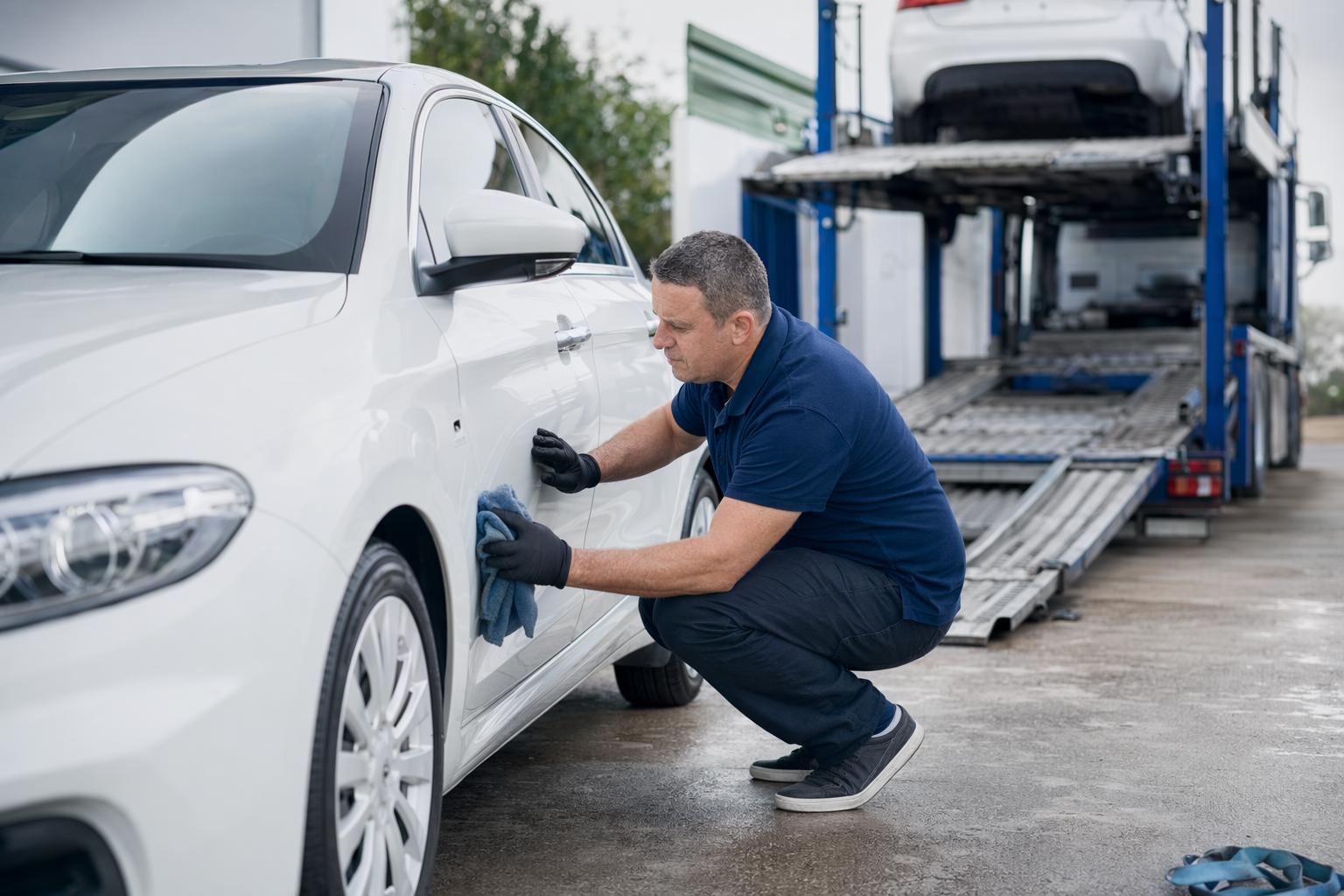
Start with the route and pickup window, then get the car ready for inspection and loading. A clean car, clear photos, low fuel, and no personal items help the carrier load it faster and reduce disputes at delivery.
Start with the route, pickup window, and transport type
Before you prepare the car itself, confirm the lane. Where is it shipping from, where is it going, and is it going door-to-door or to a terminal? Those details affect the pickup window, truck access, and how early you need the car ready.
Most shipments use open transport. It is the standard option for everyday vehicles. Enclosed transport is more common for high-value, classic, exotic, or very low-clearance vehicles. If you are still comparing options, review how car shipping works before you book.
A typical pickup window is 1 to 5 days on many busy routes, but timing varies by lane, season, weather, and how flexible you are. Transit time is usually estimated in days, not guaranteed. Have the car ready before the pickup window opens, not after.
If your street is tight, steep, gated, or has low trees or low bridges, tell the carrier or broker before dispatch. Large trucks often cannot safely enter apartment lots, narrow neighborhoods, or downtown streets. In that case, door-to-door may mean meeting at a nearby parking lot or wider road.
Clean the car and record its condition

Wash the outside of the car 1 to 2 days before pickup if you can. A clean surface makes it much easier to see scratches, chips, dents, cracked glass, and wheel damage during inspection. If the car is dusty or muddy, small damage can be missed at pickup and argued about at delivery.
Take clear, dated photos and short video from all sides in good light. Include:
- Front, rear, both sides, and all four corners
- Roof, hood, trunk, bumpers, mirrors, and wheels
- Close-ups of any existing scratches, dents, or cracked glass
- Odometer reading and fuel level
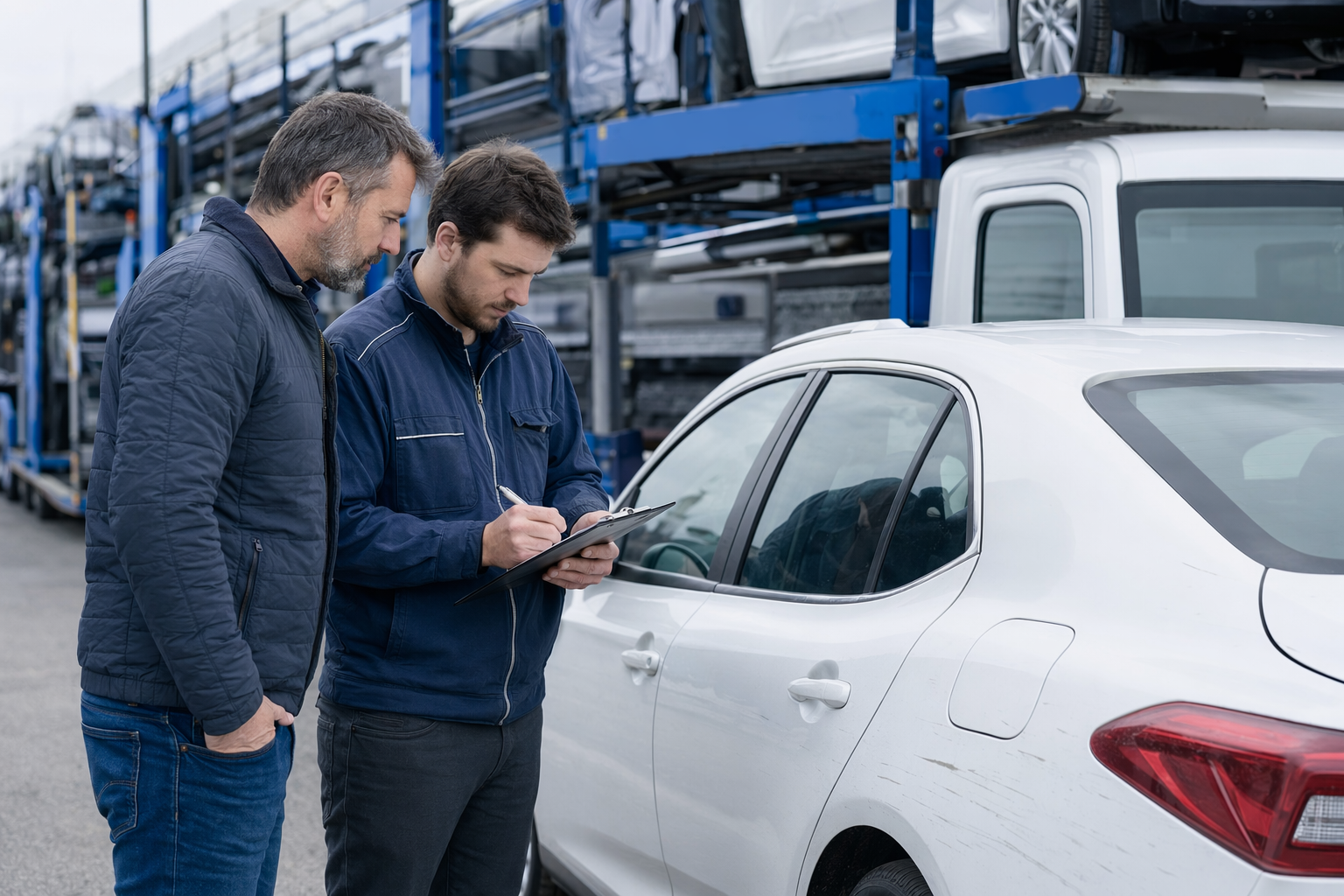
At pickup, the driver will usually note visible pre-existing damage on the inspection report or bill of lading. Read it before you sign. If something visible is missing from the report, ask for it to be added. Do the same at delivery before signing the final inspection.
This step matters most when there is a dispute later. Your photos and the inspection report are your record. For more on checking a company before booking, see how to vet a car shipping company.
Remove personal items, toll tags, and anything loose
Take out personal items before pickup. Carriers' rules often limit or prohibit household goods in the vehicle, and extra weight can affect loading and final charges. Loose items can also move around in transit and damage the interior.
Remove or secure these items:
- Laptops, phones, chargers, documents, passports, cash, and medication
- Child seats if you do not want them shifting during transit
- Garage remotes, parking passes, and toll transponders
- Portable GPS units, dash cams, radar detectors, and phone mounts
- Aftermarket spoilers, bike racks, cargo boxes, and loose accessories if possible
Ask in writing whether the company you choose allows any items in the trunk, and if so, how much. Policies vary. Do not assume your belongings are covered if something is lost or damaged. Confirm terms directly with the carrier and read the shipping paperwork carefully.
If your car has a toll tag, remove it or shield it according to the tag provider's instructions. Otherwise, it may be read while the truck passes toll points, and you may be charged by mistake.
Handle fuel, battery, fluids, tires, and alarms
Leave about 1/4 tank of fuel. That is usually enough for loading and unloading, but not so much that it adds unnecessary weight. A full tank makes the vehicle heavier and is not needed for transport.
Do a basic operating check a day or two before pickup:
- Battery charged and secured
- Tires properly inflated
- No major fluid leaks
- Keys available, including special key fobs
- Parking brake working
- Alarm turned off or instructions provided
If the car has a leak, weak battery, slow crank, low tire, or other issue, tell the carrier or broker before dispatch. The truck driver needs to know whether the car starts, steers, brakes, and rolls. Non-running vehicles can often still ship, but they usually need different equipment and may cost more.
Fold in mirrors if appropriate, retract or remove antennas if possible, and secure or remove custom parts that sit low or stick out. For very low-clearance vehicles, enclosed transport or special loading methods may be a better fit. If speed matters, ask about expedited car shipping, but expect higher price ranges and tighter timing requirements.
Be ready for pickup day and delivery day
Have one working key ready for the driver. Keep a second key with you. If you cannot be there yourself, choose a trusted person who is at least 18 and can inspect the car, sign paperwork, and answer calls during the pickup window.
On pickup day:
1. Be reachable by phone.
2. Confirm the meeting location if a large truck cannot access your address.
3. Walk around the car with the driver.
4. Review the inspection report before signing.
5. Keep copies of the paperwork and your photos.
On delivery day, inspect the car before signing the final paperwork. Compare the vehicle to your pickup photos and the original inspection report. Look at the roof, front bumper, lower rocker panels, windshield, mirrors, and wheels. If you see new visible damage, note it on the delivery inspection report before signing and ask for a copy.
If the car will be arriving before you do, plan ahead. Make sure the delivery contact can receive calls, reach the meeting point, and pay the carrier only according to the written booking terms you agreed to with the company you chose. LaneFerry only matches customers with licensed, insured carriers and brokers. It does not move vehicles or broker shipments itself.
Common mistakes that cause delays, extra charges, or disputes
Most shipping problems start with missing details. The lane may be fine, but the car is not actually ready when the truck is ready. That can lead to rescheduling, storage, or a missed pickup window.
Watch out for these common mistakes:
- The car is packed with personal items when the carrier does not allow them
- The battery is dead or the tires are flat at pickup
- The address cannot fit a transport truck, but nobody mentions it until dispatch
- Existing damage was never photographed or listed on the inspection report
- The vehicle has a leak or mechanical issue that was not disclosed
- The customer books based only on the lowest price
Be careful with companies that quote far below the others, ask for a large upfront deposit, avoid giving a USDOT or MC number, or pressure you to book today. Before you choose anyone, verify the carrier's or broker's USDOT/MC number and insurance yourself, and confirm the price and pickup window in writing.
If you are still comparing price ranges by lane, vehicle size, and season, see what it costs or start with a free match at /get-matched/.
Get the car clean, empty, photographed, and mechanically ready before the pickup window opens, then inspect the paperwork at both pickup and delivery.