Enclosed auto transport
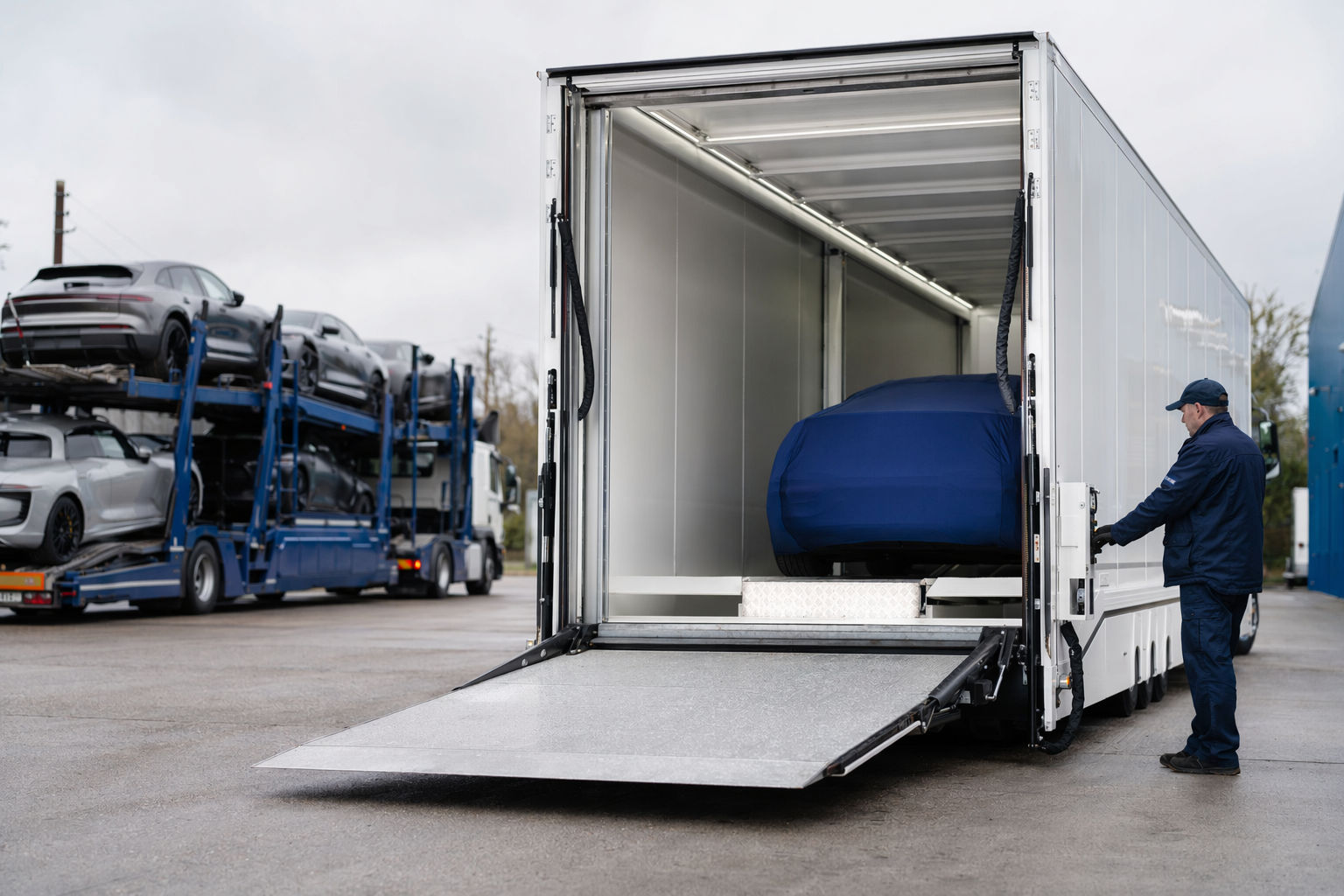
Enclosed auto transport means your car ships inside a covered trailer on the route from pickup to delivery. It usually costs more than [open transport](/services/open-car-transport/), but for some vehicles and lanes, the extra protection is worth the premium.
What enclosed auto transport is
Start with the route. Your car moves from its pickup city to its delivery city inside a fully covered trailer instead of on an open carrier.
That changes the trade-off. You usually pay more, and there may be fewer trailer options on some lanes, but the vehicle is shielded from road grit, weather, and most outside exposure during transit.
Most enclosed moves are still door-to-door when truck access allows. If your street is tight or has low branches, the carrier may set a nearby meeting point such as a large parking lot. Transit time depends on the lane, season, and dispatch timing, not just the miles.
If you are new to car shipping, the basics are the same as any shipment. You request matches, compare options, choose the carrier or broker you want, and confirm the price and pickup window in writing before booking. You can also review how car shipping works if you want the full step-by-step.
When enclosed shipping is usually worth it
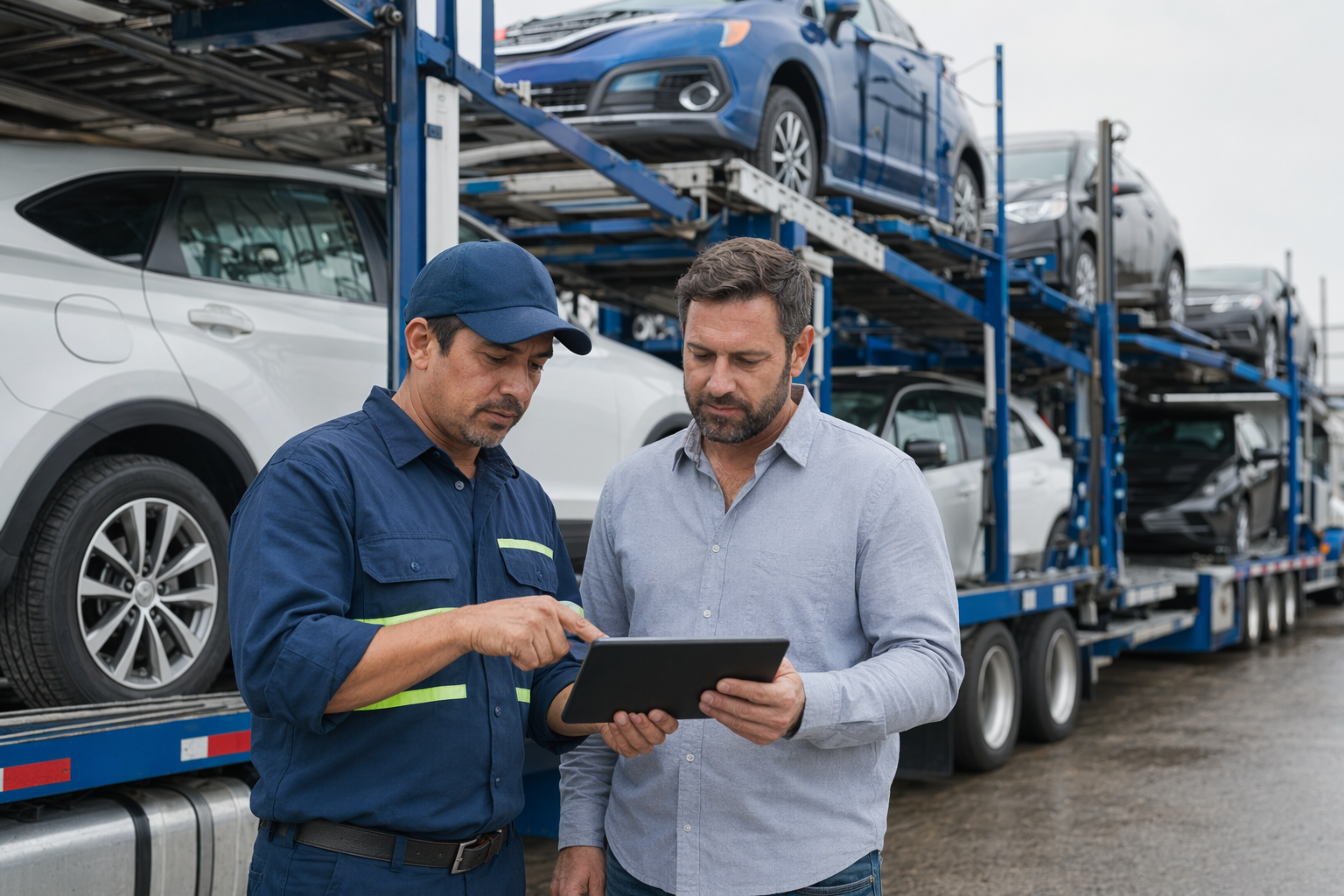
This option is commonly chosen for vehicles where condition matters more than getting the lowest price on the lane.
Enclosed transport is often a fit for:
- Luxury, exotic, or high-value cars
- Classic, antique, or collector vehicles
- Show cars and restored vehicles
- Low-clearance cars that need more careful loading
- Cars with specialty paint, wraps, or delicate finishes
- Seasonal moves where weather exposure is a bigger concern
It can also make sense if the route is long and you want less outside exposure over a cross-country trip. If the car is a standard daily driver and your main goal is keeping cost down, open transport is usually the more economical choice.
Some enclosed trailers use lift gates or ramps designed for low-clearance vehicles, but setup varies by carrier. If your car sits low, has aftermarket parts, or has special handling needs, mention that when you request matches so the right equipment can be considered.
How enclosed transport works on your route
The lane comes first. A covered trailer still needs to be dispatched on your route, and enclosed capacity is more limited than open capacity. That is why pickup windows can be a little tighter on busy lanes and a little wider on less common routes.
A typical booking flow looks like this:
1. Share the pickup and delivery zip codes, vehicle year, make, model, and your timing.
2. Review matched options from licensed, insured carriers and brokers.
3. Compare the trailer type, estimated cost range, pickup window, and typical transit time.
4. Choose the option you want and confirm the final price and pickup window in writing.
At pickup, the driver usually does an inspection and records the vehicle condition on a bill of lading. At delivery, you inspect the car again before signing off. For prep steps like washing the car, removing personal items, and checking battery and tire condition, see prepare your car for shipping.
LaneFerry's role is simple. It is a free matching service that helps you compare options for your route. It does not move vehicles or broker shipments itself. You choose the company you want to book with.
Typical cost and transit time
Enclosed shipping usually runs higher than open because the trailer carries fewer vehicles and the equipment is more specialized. The real number depends on the route, vehicle size, season, pickup flexibility, and how quickly you need dispatch.
Typical enclosed cost ranges:
- Shorter interstate routes: about $900 to $1,600
- Medium-distance routes: about $1,200 to $2,100
- Cross-country routes: about $1,700 to $3,000+
- Large SUVs, lifted trucks, and specialty vehicles can run higher
Typical transit windows:
- Short regional lanes: about 2 to 5 days in transit
- Medium-distance lanes: about 4 to 7 days
- Cross-country lanes: about 7 to 10 days
- Pickup usually happens within a window, often 1 to 5 days, but some lanes can take longer
These are estimates, not quotes. Busy snowbird seasons, severe weather, mountain routes, and limited enclosed capacity can raise the cost or extend timing. If you want a broader lane-based view, see what it costs.
Enclosed vs open: the real trade-offs
If your route has both options available, the decision is usually protection versus price.
Enclosed transport advantages:
- Covered trailer helps protect against weather and road debris
- Common choice for high-value or collector vehicles
- Often better for low-clearance cars and specialty handling needs
- Less outside exposure over long lanes
Enclosed transport drawbacks:
- Higher cost than open transport
- Fewer trailers on some routes, which can affect pickup timing
- Not every lane has the same level of enclosed availability
Open transport advantages:
- Usually the lower-cost option
- More capacity on more routes
- Often easier to dispatch quickly on common lanes
For many standard vehicles, open works well. For cars where finish, rarity, or market value matters, enclosed is often the safer fit. The route, season, and how flexible you are on pickup all affect which option makes the most sense.
How to book through free matching
Booking starts with your route and your vehicle details. You only need to share contact and shipment details such as pickup city, delivery city, vehicle information, and your timing. Do not share bank details, card numbers, or SSNs.
After that, compare the matched options carefully. Look at the estimated price range, trailer type, pickup window, and whether the route is door-to-door or may require a nearby meeting point. If you are ready to start, use get matched or review how it works.
Before you book, verify the company's USDOT and MC number yourself and confirm active insurance directly with the carrier or broker. Also confirm the final price, pickup window, cancellation terms, and trailer type in writing.
Watch for common red flags:
- A quote far below the others on the same lane
- Pressure to book today before you can compare
- Large upfront deposits
- No USDOT or MC number
- Vague answers about insurance or pickup windows
A good match is not just the lowest number. It is the option that fits your route, your vehicle, and your timing without surprises. Help is often available in your own language, and the matching service is free to the customer.
Door-to-door, terminal, and special handling notes
Most enclosed shipments are arranged as door-to-door, which means the truck gets as close to your pickup and delivery address as it safely can. If the street is narrow, steep, residentially restricted, or blocked by tree cover, the driver may ask for a nearby meeting point.
Terminal shipping is less common for enclosed moves, but it may come up on some lanes or timing situations. If storage, timing, or access is an issue, ask how the route would be handled before you book.
If your vehicle is inoperable, modified, oversized, or extremely low, say that upfront. Special equipment may be needed, and that can affect price and dispatch timing.
For any company you are considering, it is worth reading how to vet a car shipping company. Verify the USDOT/MC number and insurance yourself, then make sure all key terms are confirmed in writing.
If your car needs more protection on the route, enclosed shipping can be worth the higher price, and LaneFerry helps you compare licensed options for free.