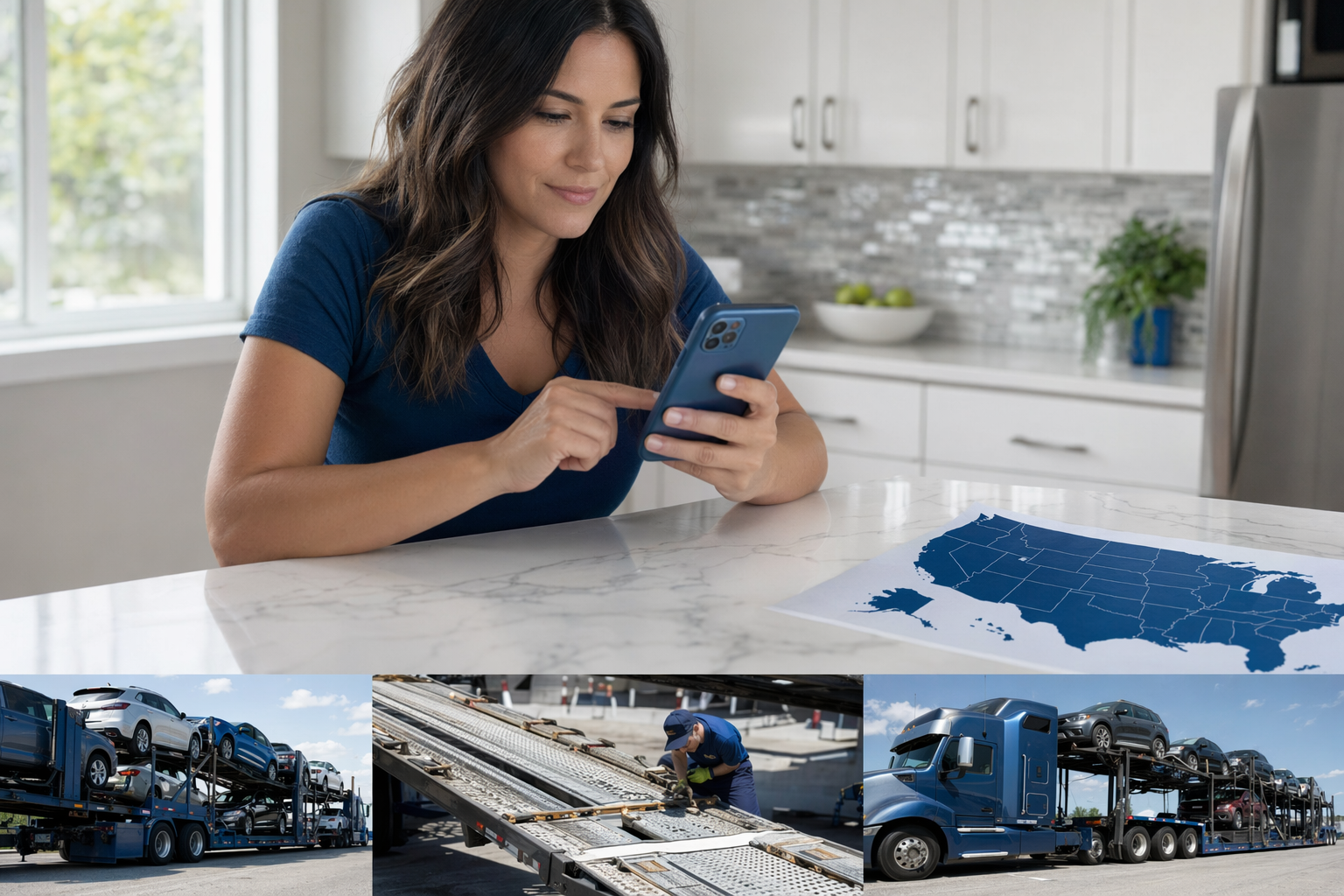
Start with the route
Car shipping starts with the lane: where the vehicle is going from and where it needs to go. That route affects the price, pickup window, and transit time more than anything else.
When you request a match, we ask for basic shipment details only. That usually means your contact information, pickup and delivery locations, vehicle year/make/model, whether it runs, your timing, and whether you want open or enclosed transport. We do not need bank details, payment information, or SSNs.
If you are not sure which service fits your route, you can review how car shipping works or start with a match request at /get-matched/.
We match you for free. You compare and choose.
LaneFerry does not move vehicles and does not broker shipments. We are a free matching service. Our job is to connect you with licensed, insured carriers and brokers that may be able to handle your lane.
Once matched, you compare the options. Look at the route, the service type, the estimated cost range, the pickup window, and the typical transit time. Then ask questions. You stay in control of who you contact and who you hire.
Before you book with anyone, verify the carrier's or broker's USDOT/MC number and insurance yourself. Also confirm the total price and pickup window in writing. If anything is unclear, ask for it in plain language before you agree.
Choose the service that fits your lane
Most people choose between open transport and enclosed auto transport, plus door-to-door or terminal service. The right choice depends on the vehicle, the route, and your timing.
- Open transport is the standard option for most everyday vehicles. It usually costs less and is more available on common lanes.
- Enclosed transport is often chosen for classic, exotic, luxury, or highly valued vehicles. It usually costs more and may have fewer trucks on a given route.
- Door-to-door means pickup and delivery as close to your addresses as a truck can safely and legally reach.
- Terminal service can work if access is tight or if you want a different drop-off point.
For many interstate and cross-country moves, open door-to-door service is the most practical place to start. If your route is long or seasonal, flexibility on your pickup window can help with price and dispatch timing.
What happens after you choose a company
After you pick the company you want to hire, they handle dispatch and coordinate the pickup window with you. On pickup day, the driver or company representative will inspect the vehicle and note its condition on the Bill of Lading. It is smart to take your own dated photos too.
Transit time depends on the lane, weather, truck availability, traffic, and how direct the route is. A short regional move may take 1 to 4 days in transit. Many mid-length routes are around 3 to 7 days. Cross-country lanes are often about 7 to 10 days, sometimes longer. Those are typical windows, not guarantees.
Before pickup, remove personal items if the company requires it, leave about a quarter tank of gas, and make sure the car is accessible. You can see a practical checklist at prepare your car for shipping.
What it usually costs
Price follows the route first, then the vehicle, then the season and timing. A shorter interstate lane might run about $500 to $900. Many medium-distance routes land around $700 to $1,200. Cross-country shipping often falls around $1,000 to $1,800 for standard open transport, with enclosed service usually higher. These are estimated ranges, not quotes.
The real number can move up or down based on:
- pickup and delivery ZIP codes
- open vs enclosed service
- door-to-door access
- vehicle size, weight, and condition
- time of year
- how fast you need pickup
If one quote is far below the others, be careful. Lowball pricing is a common problem in auto transport. Other warning signs are a large upfront deposit, pressure to book today, no USDOT/MC number, or unclear answers about insurance and pickup timing. For a fuller breakdown, see what it costs.
Why people use LaneFerry
The main benefit is simple: you do not have to start from scratch. Instead of guessing which company serves your lane, you can submit one request and get matched with licensed, insured providers that may fit your route.
That matters if you are moving to another state, sending a car to family, buying a vehicle from out of state, or arranging shipping while new to the US. Help is often available in more than one language, and the matching service is free to the customer.
We keep the process straightforward. Tell us the route. Review your options. Verify USDOT/MC and insurance yourself. Then choose the company you want and confirm the final price and pickup window in writing before booking.
You tell us where the car is going, we match you for free with licensed companies, and you decide who to hire after checking the details yourself.