Open car transport explained
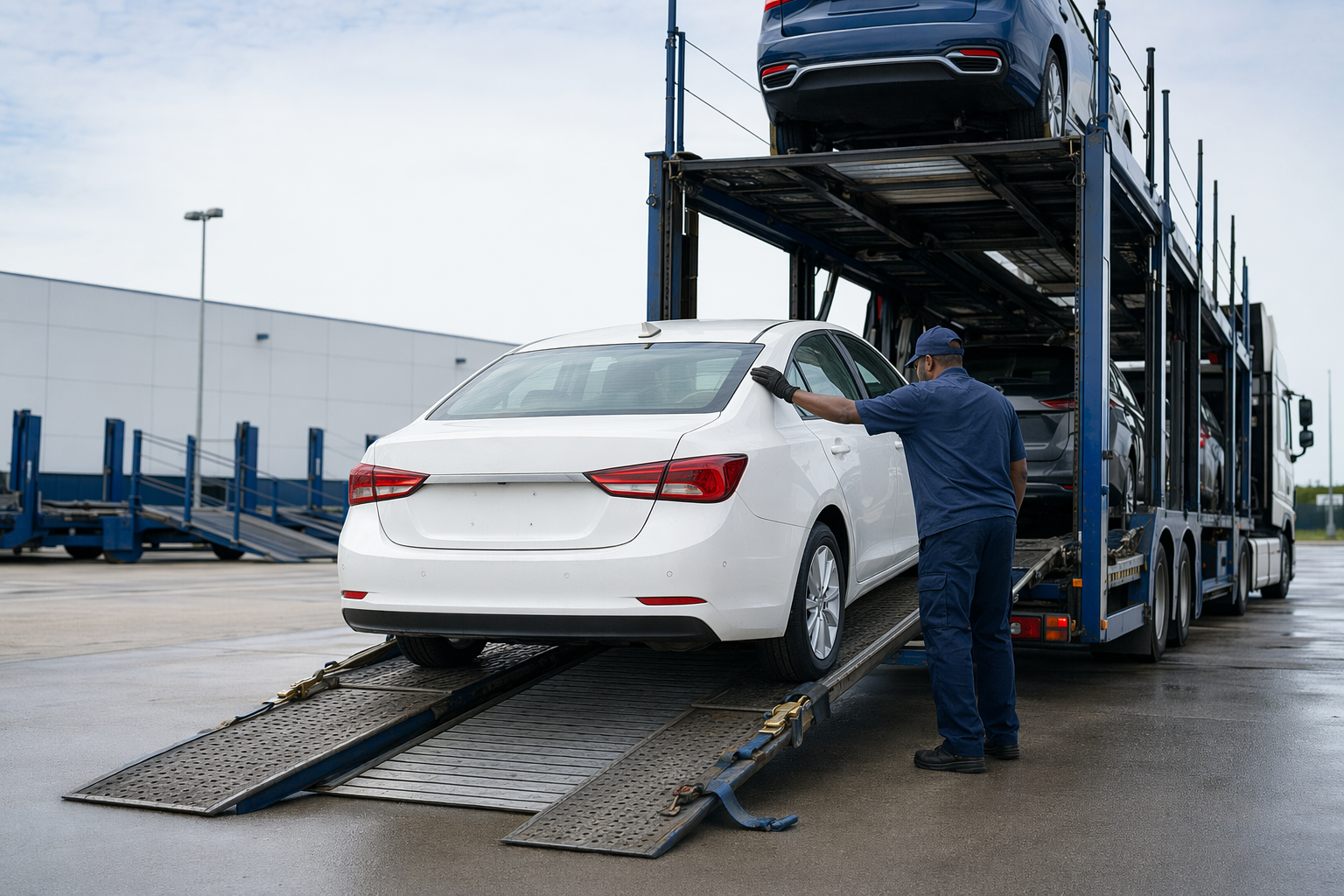
Open car transport is the standard way to ship a car on a multi-car trailer. It is usually the lowest-cost option for most interstate and cross-country routes, but the exact price and transit time still depend on the lane, vehicle, season, and timing.
What open car transport is
Open car transport means your vehicle rides on an open trailer with other cars on the same route. This is the setup most people picture on the highway: a multi-car carrier with vehicles on two levels, exposed to normal road and weather conditions.
For most standard sedans, SUVs, and pickup trucks, this is the practical first option to compare. It is common on busy lanes, easier to schedule than enclosed, and usually costs less because the carrier can move several vehicles at once.
If you are still comparing options, open transport is the standard baseline. From there, the main trade-offs are open vs enclosed, and door-to-door vs terminal.
Who open transport is usually best for
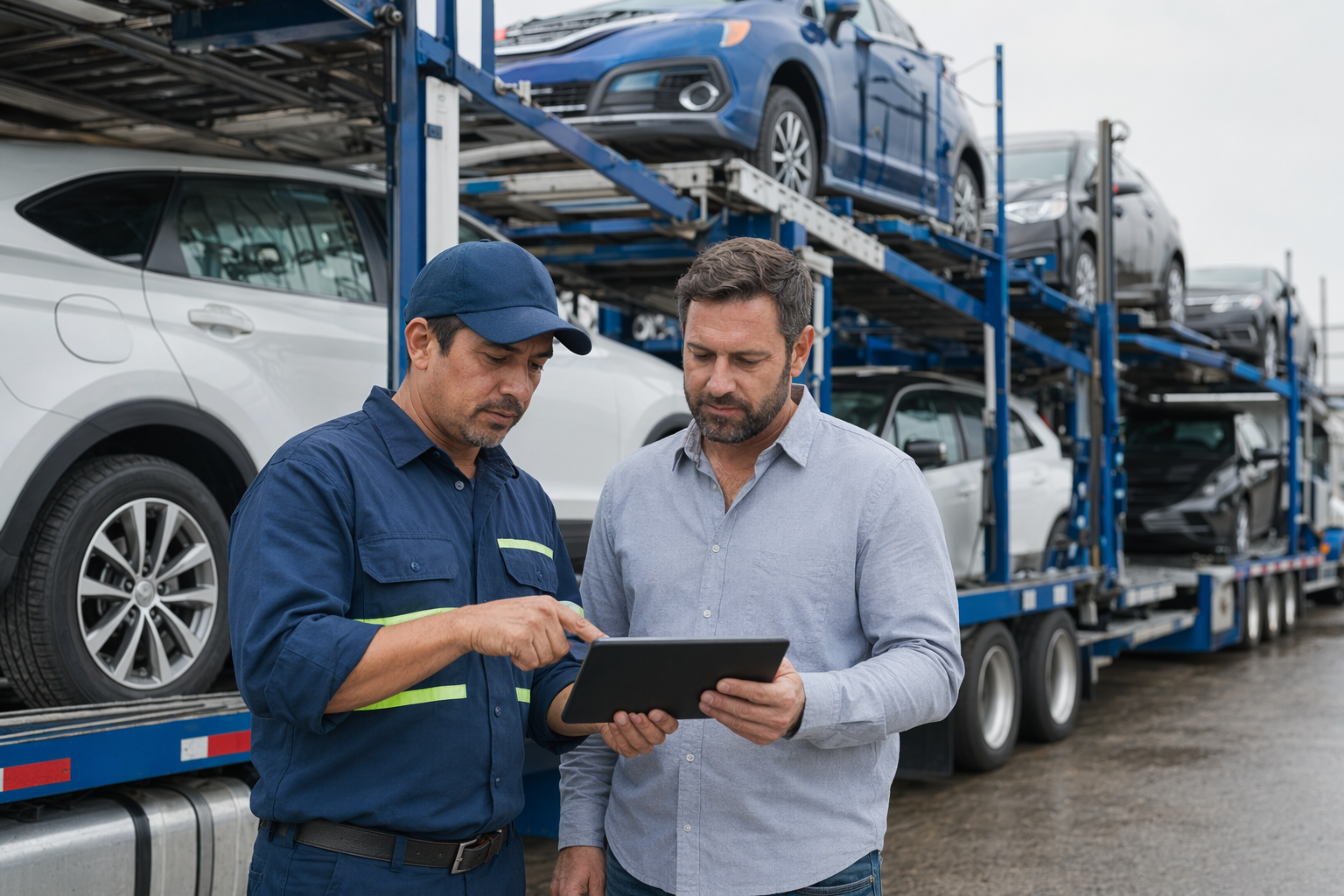
Start with the route. If you are shipping a daily driver from one city to another, moving interstate, sending a car to family, or relocating for work or school, open transport is often the best fit on price.
It is usually a good choice for:
- standard used cars
- leased vehicles
- family SUVs and crossovers
- most pickup trucks
- college moves and job relocations
- dealership and auction purchases
It may be less ideal for high-value classics, exotic cars, show cars, or vehicles with very low ground clearance. In those cases, you may want to compare enclosed auto transport instead.
If you are new to the US or arranging shipping from another city or country, open transport is also the option you will see most often on common domestic lanes. Help may be available in your language, and the matching service is free to use.
How the route, pickup window, and delivery usually work
The lane comes first. A busy route between major metro areas usually has more carrier availability than a remote pickup or delivery. That often means a better price range and a shorter pickup window. Rural areas, mountain routes, and less common lanes can take longer and may cost more.
Most shipments are booked as door-to-door when truck access is practical. That means the carrier gets as close as safely possible to your address. On tight neighborhood streets, low trees, HOA roads, or city areas with truck limits, you may meet nearby at a parking lot or wider road. You can read more about door-to-door shipping.
Typical pickup windows are often 1 to 5 days after you book, but they can be shorter or longer depending on the route and season. Typical transit time on shorter interstate lanes may be 1 to 4 days. Cross-country lanes often take about 7 to 10 days, sometimes more. Weather, traffic, dispatch timing, and route changes can affect the schedule.
Before the car is loaded, you and the driver usually inspect it and note visible condition on the bill of lading. At delivery, you inspect it again before signing off. For a step-by-step overview, see how car shipping works.
What open car transport typically costs
Open transport is usually the lower-cost option because the carrier can fill multiple spots on one trailer. But there is no single flat rate. The real number depends on the route, vehicle size, running condition, season, and how flexible your timing is.
Typical open transport ranges for standard vehicles are often:
- short interstate routes: about $500 to $900
- medium-distance routes: about $700 to $1,200
- cross-country routes: about $1,000 to $1,800
These are estimated ranges, not quotes. A compact car on a busy lane may fall near the lower end. A large SUV, lifted truck, inoperable vehicle, or remote route may push the number higher. Summer demand, snowbird season, and last-minute scheduling can also raise the cost.
If you want a fuller breakdown by distance and lane, see what it costs. When you compare matches, confirm the full price and pickup window in writing before you book.
Pros and cons of open transport
Open transport works well for most people because it balances cost, availability, and routine scheduling. On common lanes, it is often the easiest way to find a licensed, insured carrier or broker match.
The main advantages are:
- lower typical cost than enclosed transport
- more common on interstate and cross-country routes
- easier to find space on many lanes
- a practical choice for standard vehicles
The trade-offs are simple:
- the vehicle is exposed to weather, dust, and normal road conditions
- pickup and delivery timing still depends on route and dispatch conditions
- some neighborhoods cannot handle full-size carriers, so meet points may be needed
- premium, rare, or collector vehicles may need more protection
That does not mean open transport is unsafe by itself. It means it is the standard option, not the premium-protection option. The right choice depends on the vehicle and your comfort level with the route.
How to book through free matching
LaneFerry does not move vehicles or broker shipments. It is a free matching service that helps connect you with licensed, insured carriers and brokers for your route. You compare your options, choose the company you want, and confirm the details directly before booking.
To get matched, you usually share contact and shipment details only, such as:
- pickup and delivery ZIP codes
- vehicle year, make, and model
- whether it runs and drives
- your timing or first available pickup date
- whether you want open or enclosed
Then compare the matches carefully. Check the company's USDOT and MC number yourself, confirm active insurance directly with the company, and get the final price and pickup window in writing.
Be careful with offers that look too cheap. Common warning signs are a quote far below the others, pressure to book today, a large upfront deposit, or a company that will not clearly provide its USDOT or MC number. If you need a checklist, see how to vet a car shipping company.
How to prepare your car before pickup
A little prep helps the pickup go smoothly. Open transport does not require anything unusual, but the driver needs a vehicle that is ready for inspection and loading.
Before pickup, it is usually smart to:
1. wash the car enough to see existing damage
2. remove personal items and loose accessories
3. leave about a quarter tank of fuel
4. check for leaks, low tires, and battery issues
5. keep one set of keys ready for the driver
6. take clear photos before pickup and again at delivery
Do not leave valuables, important documents, or anything fragile in the car. Coverage terms and cargo rules vary, so confirm them directly with the carrier you choose. For a simple checklist, read prepare your car for shipping.
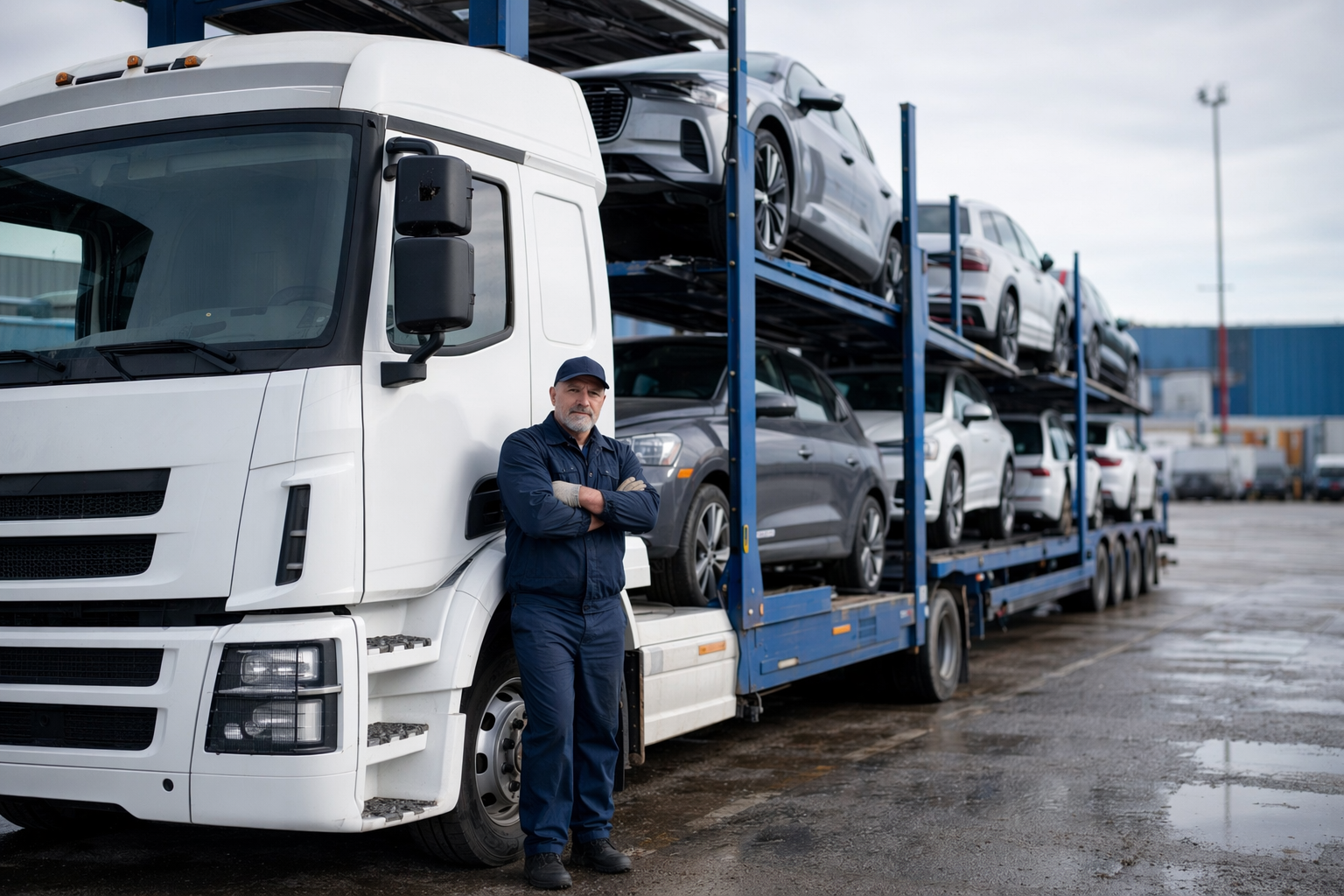
Open car transport is the usual, lower-cost way to ship a car, and LaneFerry helps you compare licensed, insured options for your route for free.