How car shipping works
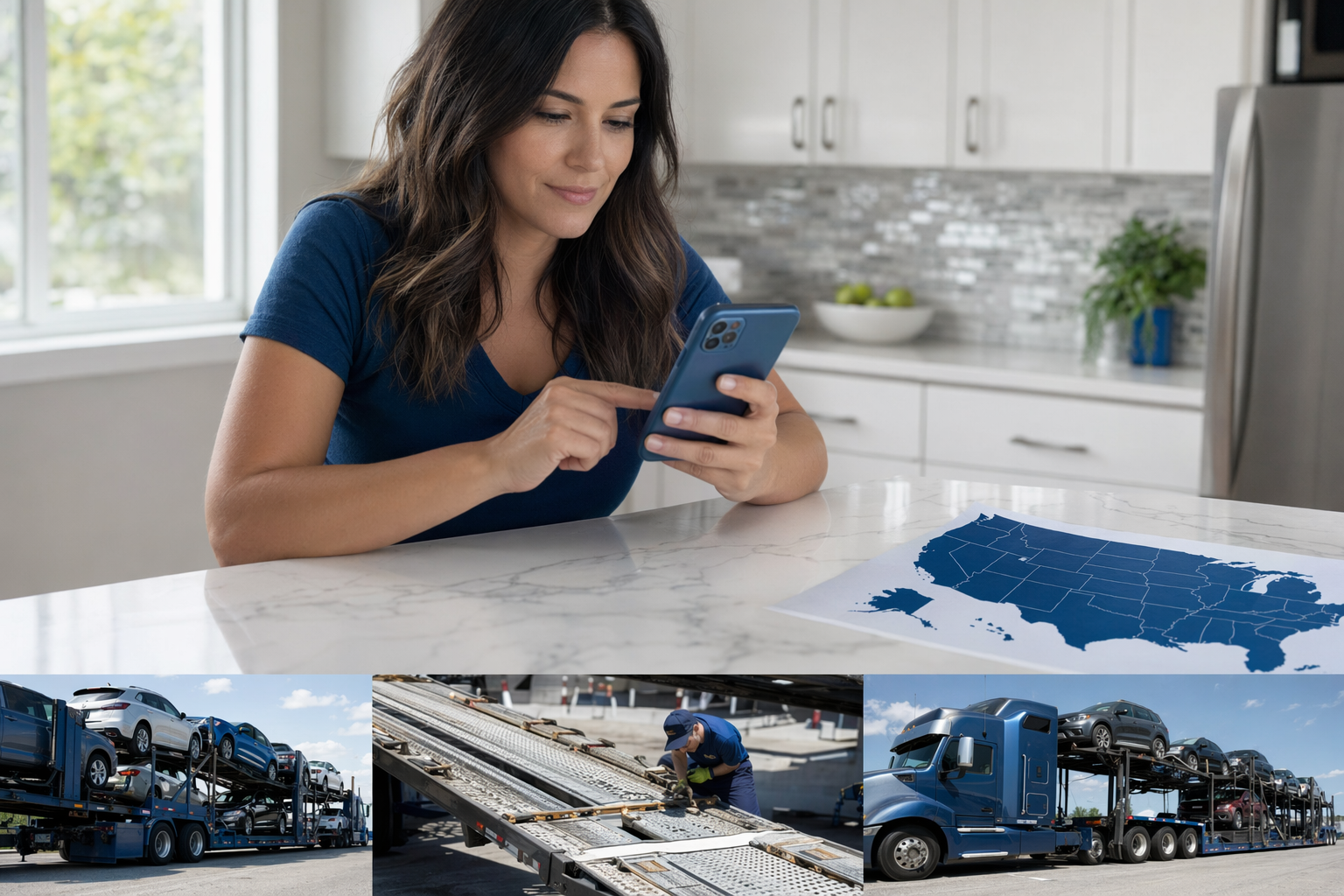
Car shipping starts with the route: where the car is going from and to, how flexible your pickup window is, and whether you need [open transport](/services/open-car-transport/) or [enclosed transport](/services/enclosed-auto-transport/). From there, the process is usually quote review, dispatch, pickup, transit, and delivery, with typical transit times and costs depending on the lane, vehicle, season, and timing.
Step 1: Start with the route and your shipping options
The first part of the process is simple. You tell the pickup city, delivery city, vehicle year/make/model, whether it runs, and your target timing. That route drives almost everything that follows: price range, pickup window, transit time, and which carriers may be available.
Then you choose the shipping setup. Most people pick door-to-door service, where the truck gets as close as safely possible at each end. On tighter streets, low branches, apartment complexes, or city centers, the carrier may use a nearby parking lot or wide road instead. Learn more about door-to-door shipping.
You will also choose open vs enclosed. Open is the standard option and usually costs less. Enclosed costs more, but it can make sense for classic, exotic, luxury, or very low-clearance vehicles. For many common interstate lanes, open transport may run about $700 to $1,200 on shorter to mid-range routes and about $1,000 to $1,800+ on longer cross-country routes. Enclosed is often about 30% to 60% more, sometimes higher for specialty vehicles.
If you use LaneFerry, the service is free. LaneFerry does not move vehicles or broker shipments. It matches you with licensed, insured carriers and brokers so you can compare your options and choose who to book with.
Step 2: Review quotes carefully before anything is dispatched
Once your route details are shared, you compare offers. This is where many people make the biggest mistake: choosing the lowest number without checking the terms. A very low quote can mean a long wait for dispatch, extra fees later, or a carrier that never actually picks up the load.
When you review a quote, look at the full lane details, not just the price:
- estimated total price range
- pickup window
- typical transit time
- open or enclosed
- door-to-door or terminal
- whether the vehicle runs
- any extra charge for oversized tires, lift kits, or personal items
Typical timing is this: pickup is usually arranged within 1 to 5 days on common lanes if your timing is flexible, but it can take longer on less-traveled routes or during busy seasons. Transit itself may be about 1 to 3 days for shorter regional moves, 3 to 6 days for mid-distance routes, and 7 to 10 days for many cross-country shipments. These are normal windows, not guarantees.
Before you book, verify the carrier's or broker's USDOT/MC number and insurance yourself. Confirm the final price and pickup window in writing. If you want a fuller checklist, see how to vet a car shipping company. Watch for red flags: a quote far below the others, pressure to book today, a large upfront deposit, vague answers, or no USDOT/MC number.
Step 3: Booking and dispatch: what happens after you choose
After you choose a company, the order is usually placed into dispatch. In plain terms, that means your shipment is offered on the route to a carrier that runs that lane. On busy lanes, this can move quickly. On rural or less common routes, dispatch may take longer because fewer trucks run that lane.
This part matters: booking does not always mean a truck is already assigned that same day. In many cases, there is still a pickup window. That is normal. Your flexibility with dates often affects both price and how quickly the load is accepted.
Before pickup, keep your contact details current and make sure someone can release the vehicle if you cannot be there. Most companies will ask for basic shipment details only, such as:
1. your name and contact information
2. pickup and delivery addresses or nearby meeting points
3. vehicle details and whether it runs
4. your preferred dates
Do not share bank account numbers, payment details, or SSNs with a matching service. LaneFerry only collects contact and shipment details so you can be matched with transport options. If you are new to the US or more comfortable in another language, help is often available in your language during the matching process.
Step 4: Prepare the car for pickup and know what the driver checks
A smooth pickup starts with a simple checklist. The car should be ready to load, easy to inspect, and legal to transport. Good prep also helps avoid disputes at delivery.
Use this basic pickup checklist:
- wash the car enough to see existing scratches, dents, or chips
- take clear photos and video from all sides, plus close-ups of any damage
- remove personal items unless the carrier specifically allows a small amount
- leave about a quarter tank of gas
- disable alarms if possible
- check for fluid leaks and battery issues
- fold mirrors and remove loose accessories if needed
- have one set of keys ready for the driver
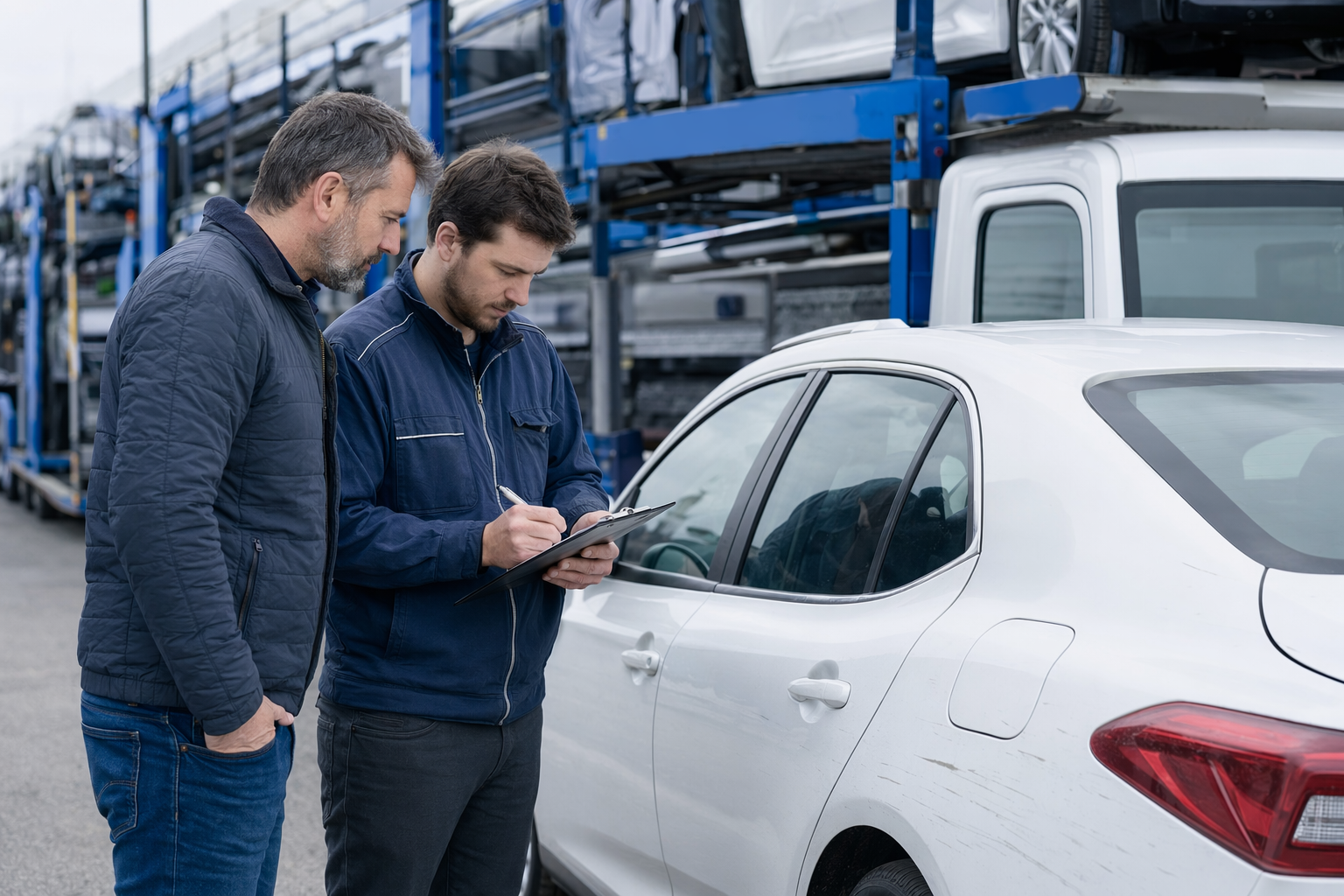
At pickup, the driver usually performs an inspection and notes the vehicle condition on a bill of lading or condition report. Read it before signing. Make sure visible damage is marked. Keep a copy and save your photos. For a fuller prep list, see prepare your car for shipping.
If your car does not run, say so early. Non-running vehicles may need a winch or special equipment, and that can change the price and carrier availability. The same goes for oversized trucks, lifted vehicles, low-clearance cars, and vehicles with aftermarket modifications.
Step 5: Transit and delivery: what to expect on the road and at drop-off
During transit, your car shares space on a truck that may have several pickups and deliveries on the same lane. Because of that, routes can shift slightly due to weather, traffic, road restrictions, driver hours, and other stops already on the truck. That is why delivery dates are usually estimated windows, not promises.
Communication during transit varies by company and route. Some drivers or dispatch teams provide periodic updates. Others check in mainly around pickup and near delivery. If timing is important, ask how updates are handled before you book.
At delivery, inspect the car before signing the final paperwork. Compare the vehicle to your pickup photos and the original condition report. If you see new damage, note it clearly on the bill of lading before you sign and take fresh photos right away. Then contact the carrier directly to ask about its claims process and insurance documentation. Confirm coverage and claim steps with the carrier itself.
If the truck cannot safely enter your street, delivery may happen at a nearby open area such as a shopping center lot or truck-accessible road. That is common with door-to-door service and usually reflects safety and access limits, not a problem with your order. If you want a broader overview of the full process, read how car shipping works.
Common problems to avoid
Most shipments go through without major issues, but a few problems come up again and again. The good news is that they are usually avoidable if you know what to look for before booking.
The most common issues are:
- a price that changes because the original quote was unrealistically low
- long pickup delays on low-volume lanes or when the budget is too far below market
- surprise charges for non-running vehicles, oversized vehicles, or hard-access addresses that were not disclosed early
- confusion about whether the service is a carrier, a broker, or a matching service
A practical rule: compare several offers for the same route and look for the middle of the pack, not just the cheapest number. Ask what is included, what could change the price, and how the pickup window works. Then get the final price and terms in writing before booking.
If you are budgeting, start with general ranges on what it costs or the quick overview on /costs/. Honest planning usually leads to a smoother shipment than chasing the absolute lowest number.
You give the route and car details, compare options, verify the company, confirm the price and pickup window in writing, then the car is picked up, hauled on that lane, and inspected again at delivery.