Car-shipping cost estimator
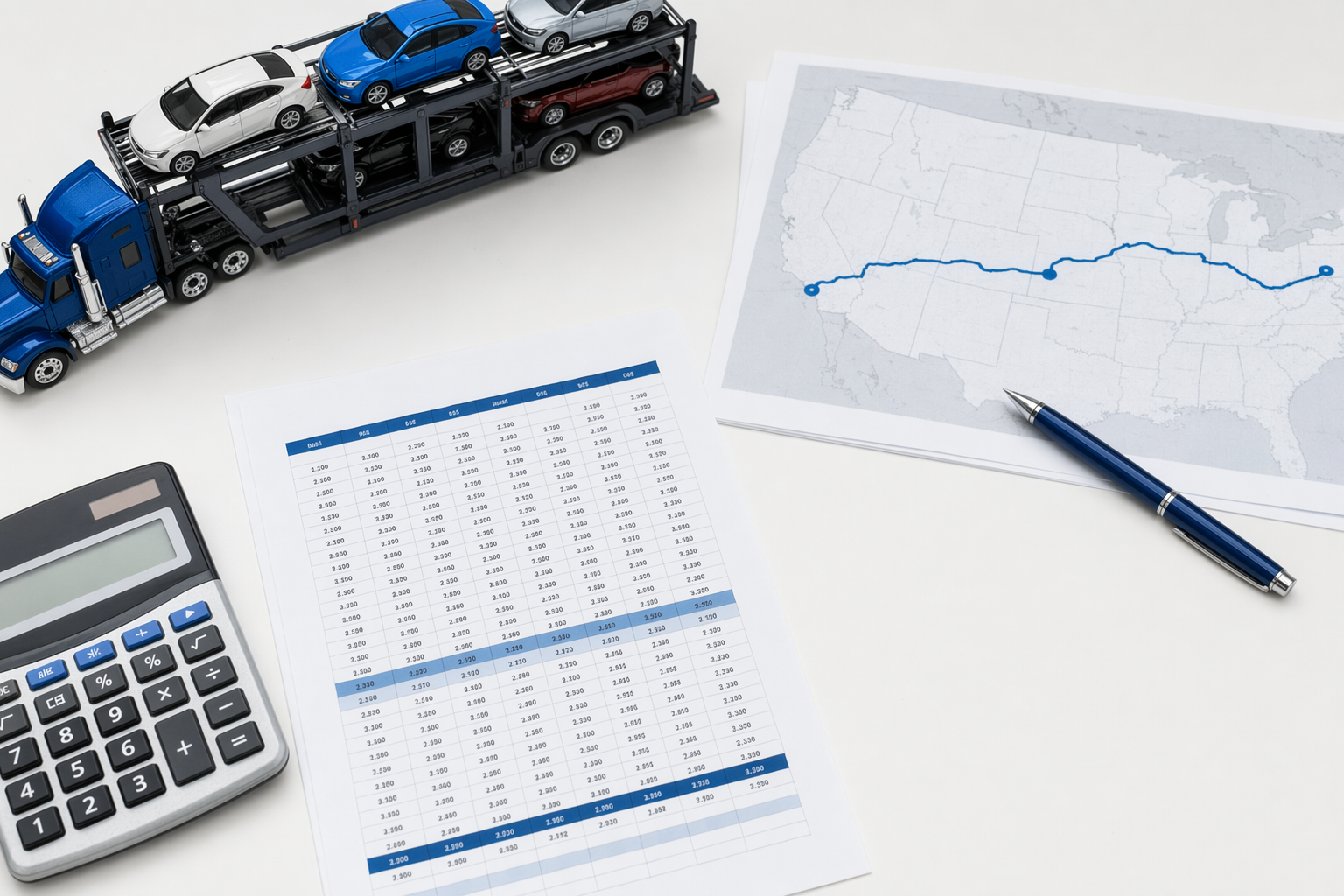
Use this cost estimator to plan a realistic car-shipping budget before you request quotes. It gives you a typical range by route, distance, and transport type, then helps you compare offers from licensed, insured carriers and brokers in one place through LaneFerry's free matching service.
What this cost estimator does
Start with the lane. Car shipping is priced by route first, then by the choices that follow: open vs enclosed, door-to-door vs terminal, vehicle size, season, and how flexible your pickup window is.
This estimator is a planning tool. It shows typical price ranges so you can set a budget and spot quotes that look too low or too high. It is not a quote, and the real number can change based on the route, vehicle, season, and timing.
You can use it two ways:
1. Get a rough budget before you move, buy a car, or send a vehicle to another state.
2. Compare incoming quotes and see whether they fit the lane and service level you asked for.
If you want to go deeper after using the tool, read what it costs and how car shipping works. A free downloadable PDF version of this estimator and checklist is also available for offline planning.
How to use the estimator
Enter the basics only: pickup city or ZIP, delivery city or ZIP, vehicle year/make/model, whether it runs, and your timing. LaneFerry only needs contact and shipment details to match you with licensed, insured carriers and brokers. Do not send financial account numbers, SSNs, or payment details.
Then choose the service level you want to compare:
- Open transport: the most common and usually the lower-cost option for standard vehicles. See open transport.
- Enclosed transport: typically costs more and is often chosen for high-value, classic, exotic, or specialty vehicles. See enclosed transport.
- Door-to-door: more convenient, but final access depends on truck-safe streets and local restrictions.
- Terminal: sometimes available on some lanes, but less common and not always cheaper.
The estimator will show a typical range, not a promise. After that, compare actual quotes. Before you book, verify the carrier or broker's USDOT/MC number and insurance yourself, and confirm the total price and pickup window in writing.
A good way to use the tool is simple: run the lane, note the range, then compare at least a few offers. If one quote is far below the others, treat that as a warning sign, not a bargain.
Typical cost ranges by distance and transport type
These ranges are for planning only. Real pricing depends on the lane, how busy that route is, the vehicle, the season, fuel, and timing. Open transport is usually less expensive than enclosed. Shorter routes often cost more per mile than longer cross-country lanes.
- 0 to 500 miles
- Open: about $400 to $900
- Enclosed: about $700 to $1,300
- 500 to 1,000 miles
- Open: about $700 to $1,200
- Enclosed: about $1,000 to $1,700
- 1,000 to 1,500 miles
- Open: about $900 to $1,500
- Enclosed: about $1,300 to $2,100
- 1,500 to 2,000 miles
- Open: about $1,100 to $1,800
- Enclosed: about $1,600 to $2,500
- 2,000 to 3,000 miles
- Open: about $1,300 to $2,100
- Enclosed: about $1,900 to $3,000
Transit time also follows the lane. A shorter route may take 1 to 4 days in transit, while a cross-country shipment may take about 5 to 10 days in transit, sometimes longer on less common routes. Pickup usually happens within a pickup window, not at an exact promised hour or date.
Common route patterns matter:
- Major city to major city lanes are often more competitive and may price lower.
- Rural pickup or delivery usually adds cost and time.
- Tight timing or expedited requests usually raise the price.
- Inoperable vehicles usually cost more because loading takes extra equipment or planning.
For coast-to-coast and long-haul moves, see cross-country car shipping for lane-specific planning points.
What changes the number on your lane
Two shipments can have the same mileage and still price differently. The route is only the start. These are the main cost drivers the estimator helps you think through.
- Route density: Busy lanes between large metro areas usually have more truck capacity. Remote areas, mountain routes, and low-volume lanes can cost more.
- Vehicle type: SUVs, trucks, vans, lifted vehicles, and oversized vehicles take more trailer space and may add cost.
- Running condition: If the car does not start, steer, or brake normally, carriers may charge more for special loading.
- Service level: Enclosed usually costs more than open. Door-to-door may cost more than meeting nearby at a truck-safe location.
- Season: Snowbird season, summer demand, holidays, and severe weather can all shift pricing and transit time.
- Timing: Flexible pickup windows usually help. Last-minute dispatch or expedited car shipping usually costs more.
A practical rule: the best quote is usually not the cheapest one. Watch for scams and overcharging tactics such as:
- a quote far below the others
- a large upfront deposit
- no USDOT/MC number
- pressure to book today
- vague insurance answers
LaneFerry's role is simple. It is a free matching service that connects you with licensed, insured carriers and brokers so you can compare options. LaneFerry does not move vehicles, broker shipments, or hold FMCSA broker authority.
Free checklist: compare quotes without getting surprised
Use this checklist with the estimator before you book. A free downloadable PDF version is available if you want something easy to print or share with family.
1. Confirm the lane exactly
- Pickup and delivery ZIPs or cities
- Whether the truck can reach both addresses safely
- Whether you want door-to-door or are open to a nearby meeting point
2. Confirm the vehicle details
- Year, make, model
- Running or non-running
- Modifications, oversized tires, roof racks, or low ground clearance
- Approximate condition before pickup
3. Confirm the service level
- Open or enclosed
- Earliest ready date
- Flexible or tight pickup window
- Any need for faster dispatch
4. Confirm the quote in writing
- Total price
- Pickup window
- Estimated transit time
- Deposit amount, if any, and when the balance is due
- Cancellation terms
5. Verify the company yourself
- USDOT/MC number
- Active insurance
- Business name matches the paperwork
- Contact details are consistent across documents
6. Prepare the car before pickup
- Remove personal items unless the carrier allows a small amount in writing
- Leave about a quarter tank of fuel
- Take photos at pickup and delivery
- Keep one key available
If you want help checking a company's paperwork and questions to ask, read how to vet a car-shipping company and prepare your car for shipping. If you are ready to compare real offers after using the estimator, go to get matched. Help is often available in more than one language, and the matching service is free to the customer.
This tool helps you estimate a realistic car-shipping price range for your route, then compare written quotes carefully before you choose a licensed, insured company.