Quote-comparison worksheet
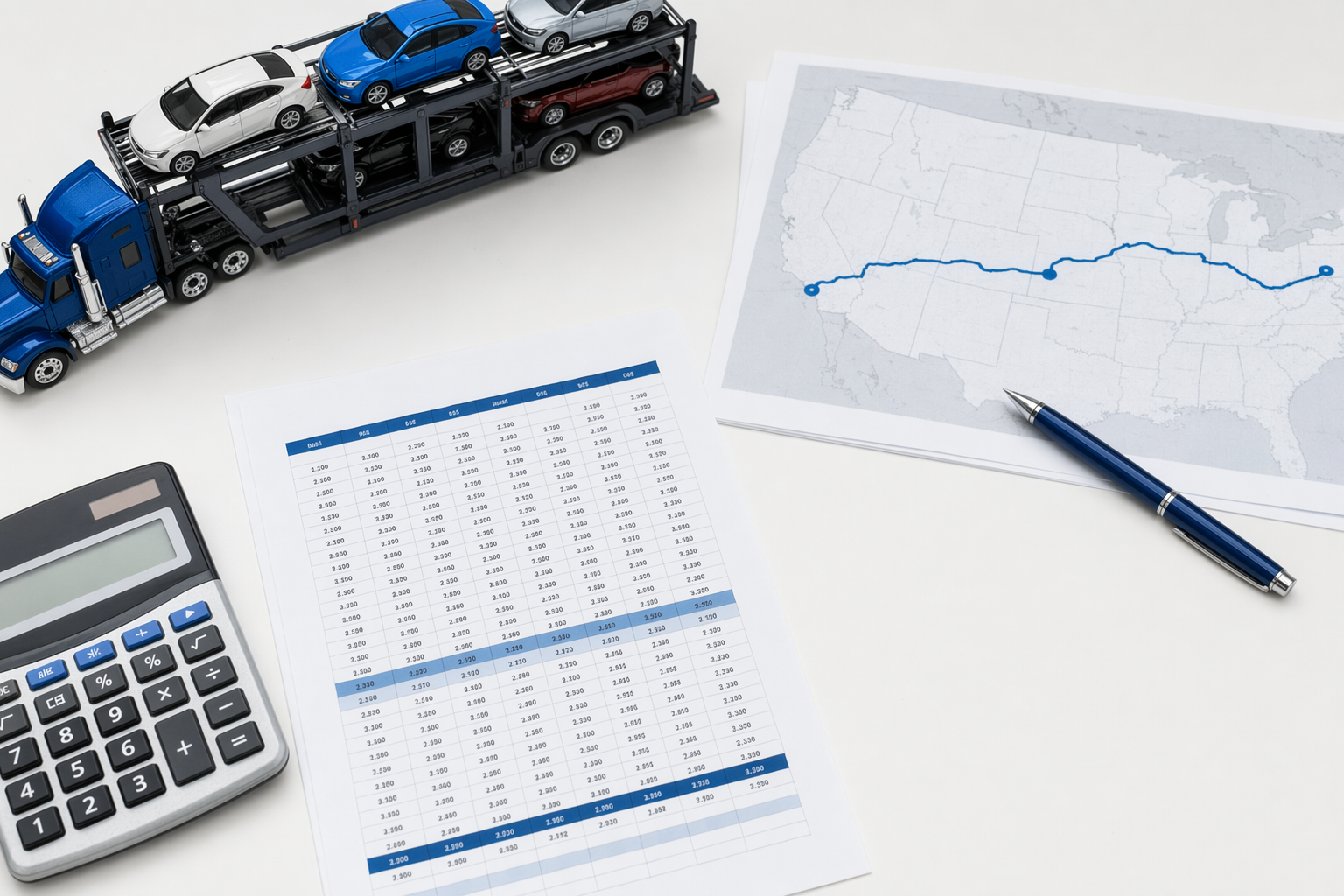
If you are comparing car-shipping quotes, start with the lane: where the car is going from and to, and when you need it picked up. This free worksheet helps you line up quotes side by side so you can compare the real differences in price, transport type, pickup window, and carrier details before you book.
What this worksheet is for
A car-shipping quote can look simple at first. Then the details start to move around. One company may show a lower number but a wider pickup window. Another may include enclosed transport, terminal delivery, or a different cancellation policy. This worksheet gives you one place to compare the same route across multiple quotes.
Use it for any lane in the US, including interstate and cross-country moves. It works best when you ask each company for pricing on the same vehicle, the same route, the same transport type, and the same timing. That way you are comparing like with like, not one quote for open transport and another for enclosed.
LaneFerry is a free matching service. We do not move vehicles or broker shipments. We connect you with licensed, insured carriers and brokers so you can compare options yourself. You choose who to book with, and you should confirm the final price and pickup window in writing before booking.
If you want a quick refresher before you fill it out, see how car shipping works and what it costs.
How to use the worksheet

Start with the route first. Write down the pickup city, state, ZIP if you have it, then the delivery city, state, ZIP. Add your first available pickup date and whether your timing is flexible. Car shipping prices and transit time ranges depend heavily on the lane, the vehicle, the season, and how tight your timing is.
Next, decide what you want each quote to cover:
- Open or enclosed transport
- Door-to-door or terminal
- Running or non-running vehicle
- Standard or tighter pickup timing
- Any size notes, such as SUV, truck, lifted vehicle, or low-clearance car
Then collect the same details from each company and place them side by side. This is where the worksheet helps. A quote that looks cheaper may not include the same service level.
A free downloadable PDF version is also available if you want something you can print, save, or email to family members. If you still need options to compare, you can get matched for free.
The quote-comparison worksheet
Copy this list into your notes, spreadsheet, or printed PDF. Compare at least 3 quotes for the same lane.
1. Route details
- Pickup city and state
- Delivery city and state
- First available pickup date
- Flexible dates or fixed dates
- Door-to-door or terminal
2. Vehicle details
- Year, make, model
- Running or non-running
- Modifications or lift kit
- Approximate condition notes
- Personal items allowed or not allowed in vehicle
3. Transport type
- Open transport or enclosed transport
- Single-car trailer or multi-car trailer if stated
- Any route restrictions due to vehicle size or road access
4. Price details
- Estimated total price range
- Deposit amount, if any
- Balance due at pickup or delivery
- What could change the final amount
- Any added fees for inoperable vehicles, oversized vehicles, remote areas, or expedited timing
5. Pickup window
- Earliest pickup date
- Latest pickup date
- How many days the pickup window lasts
- Whether the quote is standard timing or expedited
- What happens if the vehicle is not picked up in that window
6. Transit time
- Typical transit time range in days
- Whether weekends are counted
- Whether delays from weather, traffic, dispatch timing, or route changes are mentioned
- Whether delivery is estimated or date-specific
7. Carrier or broker details
- Company name
- Contact person
- USDOT number
- MC number if provided
- Website and email
- Whether they are acting as a carrier or a broker
8. Insurance and paperwork
- Cargo insurance stated or not stated
- Certificate of insurance available on request
- Deductible mentioned or not mentioned
- Bill of lading used at pickup and delivery
- Damage claim process explained or not explained
9. Terms you should confirm in writing
- Final agreed price
- Pickup window
- Delivery method
- Cancellation terms
- Payment method accepted by the company you book with
10. Your notes
- Fast replies or slow replies
- Clear answers or vague answers
- Pressure to book today or not
- Price far below others or within normal range
- Overall comfort level
If you are comparing open transport with enclosed transport, keep those quotes on separate lines. They are different service levels, so the lower open quote is not a direct match to the enclosed one.
How to read the differences without getting fooled by a low number
The best quote is usually not the cheapest line on the page. It is the quote that matches your route, your vehicle, and your timing with clear terms. On a busy lane, several quotes may land in a similar range. If one is far below the others, stop and ask why.
Watch for these common red flags:
- A price far below the rest with no explanation
- A large upfront deposit before dispatch
- No USDOT or MC number provided
- Pressure to book immediately
- Vague answers about insurance, pickup window, or who is actually moving the car
Also look for hidden trade-offs. A lower quote may mean a wider pickup window, terminal delivery instead of door-to-door, or slower dispatch. For many people, especially on a cross-country lane, the better value is the quote with the clearest pickup window and the least confusion, even if it is not the lowest number.
Before you book, verify the carrier's or broker's USDOT/MC number and insurance yourself. Confirm the price and pickup window in writing. If you want a checklist for that step, read how to vet a car-shipping company.
What a good comparison usually tells you
Once you fill in the worksheet, patterns usually show up quickly. You will see the normal price band for your lane, whether enclosed transport is worth the extra cost for your vehicle, and whether one company is giving a realistic pickup window or just a hopeful one.
You will also be in a better position to ask practical questions:
- Is this quote for the exact same route and vehicle?
- Is this open or enclosed?
- Is this door-to-door, and can the truck access both addresses?
- What is the typical pickup window?
- What is the typical transit time range?
- Who should I contact during dispatch and transit?
This worksheet does not replace your own checks. It helps you slow down and compare the lane properly so you are less likely to overpay or agree to unclear terms. If you need the vehicle moved on a long lane, you may also want to compare standard timing with cross-country shipping or a tighter pickup window with expedited service if available.
Use the PDF, keep your notes, and choose the company that gives you the clearest written terms for the route you actually need.
This free worksheet helps you compare car-shipping quotes side by side so you can choose the clearest real value for your route, not just the lowest number.