Shipping a luxury or classic car
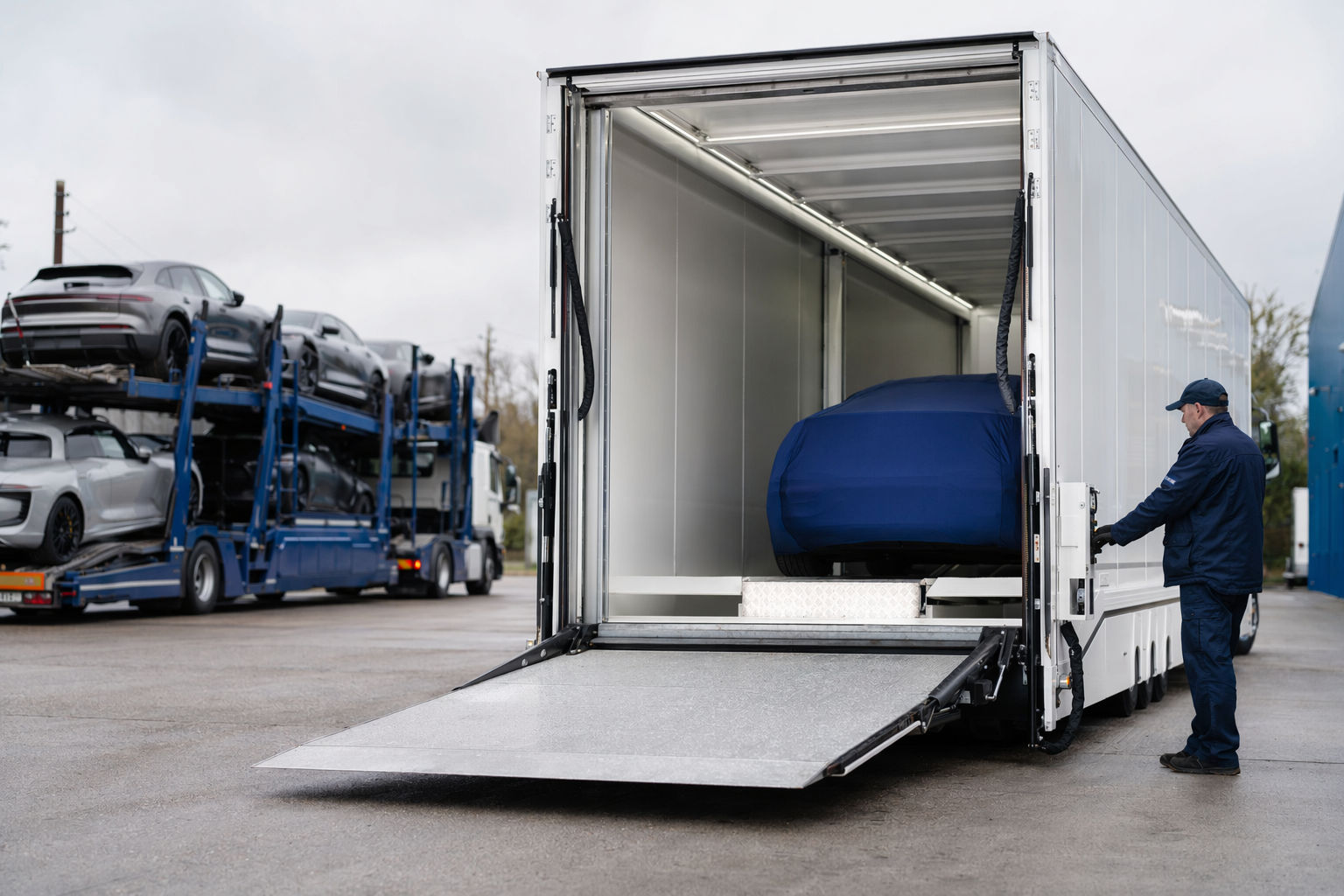
Luxury and classic cars follow the same lanes as other vehicles, but the route, equipment, and handling matter more. This guide walks through the usual choices, typical cost ranges, and the checks to make before you book with a licensed carrier or broker matched through LaneFerry’s free service.
Start with the route, then choose the right setup
First, look at the lane. A short, busy route between major cities usually has more carrier options and shorter pickup windows. A long cross-country route, a rural pickup, or a seasonal move to or from snowbird states usually costs more and can take longer to dispatch.
For a luxury, exotic, vintage, or collectible vehicle, the main decision is usually open transport versus enclosed auto transport. Open costs less and is common for standard vehicles. Enclosed costs more, but it reduces road exposure from weather, dust, and debris. For many classics and high-value cars, enclosed is the more typical choice.
Then decide door-to-door or terminal. Door-to-door shipping is the usual setup if truck access is safe and legal on both ends. If your street is tight, has low trees, HOA limits, or city parking restrictions, the truck may arrange a nearby meeting spot instead. Terminal options exist on some routes, but are less common and may add coordination.
If the car sits very low, has wide tires, limited ground clearance, or special loading needs, say that up front when you request matches. The right trailer and lift-gate setup can affect both price and timing.
Typical cost ranges for luxury and classic car shipping

Price starts with the route. Then the vehicle, trailer type, season, and timing move the number up or down. These are estimate ranges, not quotes.
Typical ranges for enclosed transport on a running sedan, coupe, or small SUV:
- 0 to 500 miles: $900 to $1,600
- 500 to 1,000 miles: $1,200 to $2,100
- 1,000 to 1,500 miles: $1,600 to $2,700
- 1,500 to 2,500+ miles: $2,200 to $4,000+
Open transport can be lower, often by a few hundred dollars on short lanes and more on long lanes. But for collector cars, restored vehicles, and high-end luxury models, lower cost is not the only trade-off. Exposure, loading style, and the carrier’s experience with specialty vehicles matter.
What usually raises the price:
- Enclosed trailer
- Inoperable vehicle
- Low clearance or modified suspension
- Oversize trucks, full-size SUVs, or heavy vehicles
- Rural pickup or delivery
- Fast pickup needs or expedited shipping
- Peak seasons, including summer and snowbird lanes
What can help keep cost down:
- Flexible pickup window
- Major-city to major-city route
- A running vehicle with standard dimensions
- Booking before the last minute
- Being open to a nearby meeting point if a large truck cannot reach your address safely
Transit time and pickup windows: what is typical
Transit time depends on the lane, not just the mileage. A common interstate route can move faster than a shorter rural route because there is more truck traffic and easier dispatch.
Typical windows for a running vehicle:
- 0 to 500 miles: 1 to 3 days in transit
- 500 to 1,000 miles: 2 to 5 days
- 1,000 to 1,500 miles: 3 to 6 days
- 1,500 to 2,500+ miles: 5 to 9 days
That is transit time once the vehicle is picked up. Pickup itself usually happens within a window, often 1 to 5 days on standard lanes and sometimes longer on harder routes. If you need a tighter timeline, ask about expedited options, but expect a higher range.
Do not rely on a verbal promise alone. Before booking, confirm the total price, the pickup window, and the delivery estimate in writing. Weather, traffic, mechanical issues, and route changes can shift timing, especially on long hauls.
How to prepare a luxury or classic car before pickup
A specialty vehicle should be documented carefully before it goes on the trailer. Good prep helps at both pickup and delivery.
- Wash the car so the condition is easy to inspect.
- Take clear date-stamped photos from all sides, plus wheels, glass, roof, interior, and close-ups of any existing marks.
- Remove loose personal items, toll tags if advised, and fragile add-ons. Most carriers do not want household goods in the car.
- Leave about a quarter tank of fuel unless the carrier gives different instructions.
- Check battery charge, tire pressure, and fluid leaks if the car runs.
- If the car is not operable, disclose that early so the right equipment is arranged.
For classics, also mention anything unusual: hard starting, manual choke, hidden battery disconnect, alarm procedure, very low front spoiler, wood steering wheel lock, or delicate interior trim. For convertibles or rare trim pieces, ask how the car will be loaded and secured.
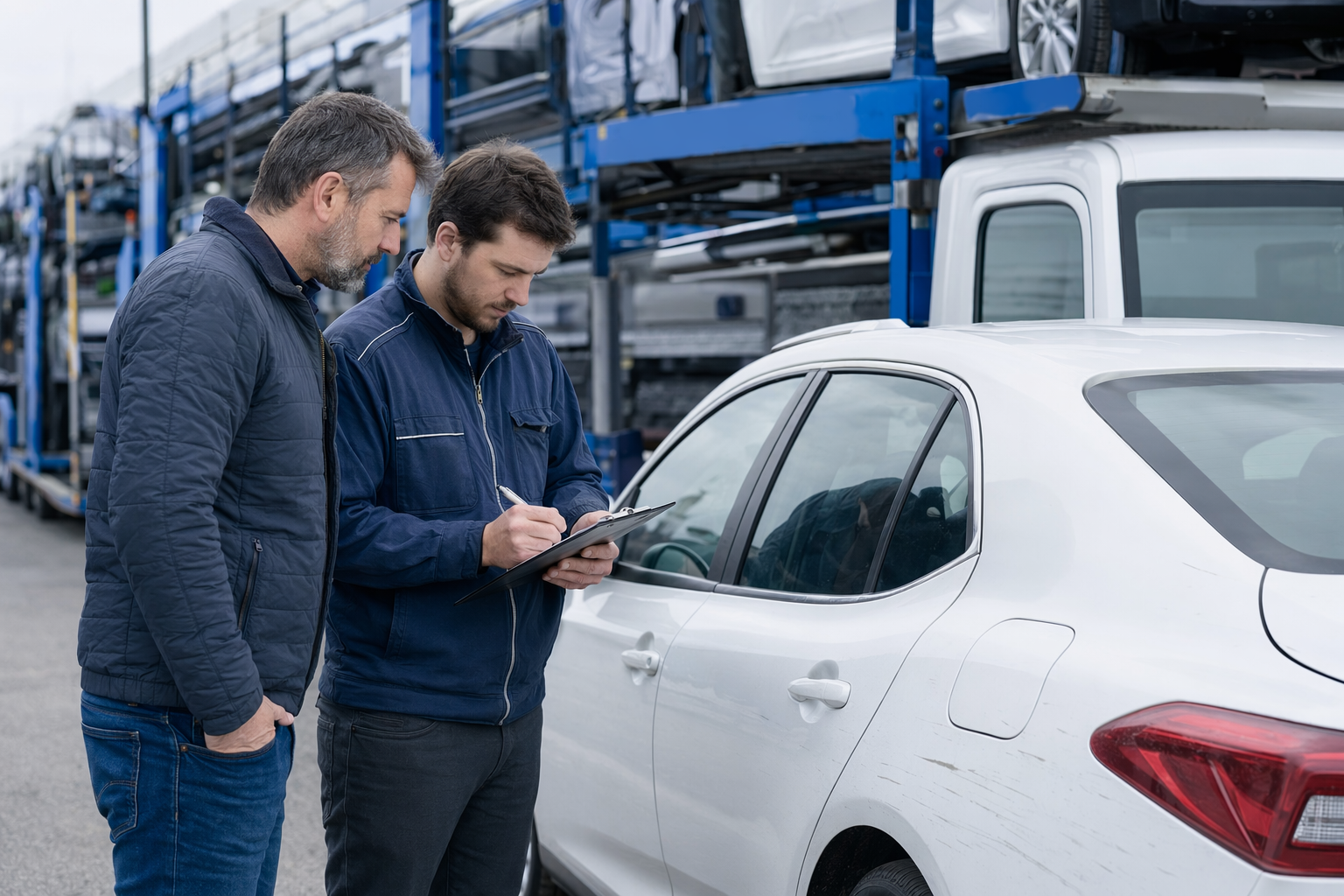
At pickup, review the bill of lading and condition report. At delivery, inspect the car before signing off. If you see new damage, note it on the delivery paperwork right away and take photos. Coverage and claims rules vary, so confirm insurance terms directly with the carrier before the move. For a full checklist, see prepare your car for shipping.
How to vet the company you choose
LaneFerry is a free matching service. It does not move cars or broker shipments. You compare the options, choose the company you want, and confirm the terms yourself before booking.
Check these basics every time:
- Ask for the company’s USDOT and MC number, if applicable, and verify them yourself.
- Ask for proof of cargo insurance and confirm the limits and exclusions directly with the company.
- Confirm whether the company is the carrier moving the car or a broker arranging the shipment.
- Get the full price, pickup window, cancellation terms, and any extra fees in writing.
- Read the inspection and claims process before the car is dispatched.
Watch out for common scams and overcharging tactics:
- A quote far below the others on the same lane
- Pressure to book today or lose the rate
- A large upfront deposit without clear written terms
- No USDOT or MC number, or reluctance to share it
- Vague answers about insurance, equipment, or who is actually moving the car
If you are new to the US or more comfortable in another language, ask for help in your preferred language. Clear communication matters on specialty shipments. You can also review how car shipping works and how to vet a car shipping company before you choose.
When enclosed transport is worth it
Enclosed transport is usually worth a serious look if the car is rare, restored, very low, freshly painted, or expensive to repair. It is also common when the owner wants less road exposure during a long trip or during poor weather seasons.
That does not mean enclosed is mandatory for every luxury badge. Some newer premium vehicles move on open trailers every day without issue. The question is not just value on paper. It is your risk tolerance, the car’s condition, the route, and how easy the vehicle is to replace or repair.
A practical way to decide:
- Choose enclosed for classics, collector cars, exotics, custom paint, and very low-clearance vehicles
- Consider open for newer daily-driven luxury cars if the lane is short, the budget matters, and you are comfortable with normal road exposure
- Ask about loading method, tie-down points, and whether the trailer is suited to your car’s height and dimensions
If you want to compare options, use a free match request and review the route, trailer type, pickup window, and written price side by side before you commit.
For a luxury or classic car, the route sets the price and timing, enclosed is often the safer choice, and you should verify the company’s USDOT or MC number, insurance, and written terms yourself before booking.