Door-to-door vs terminal-to-terminal shipping
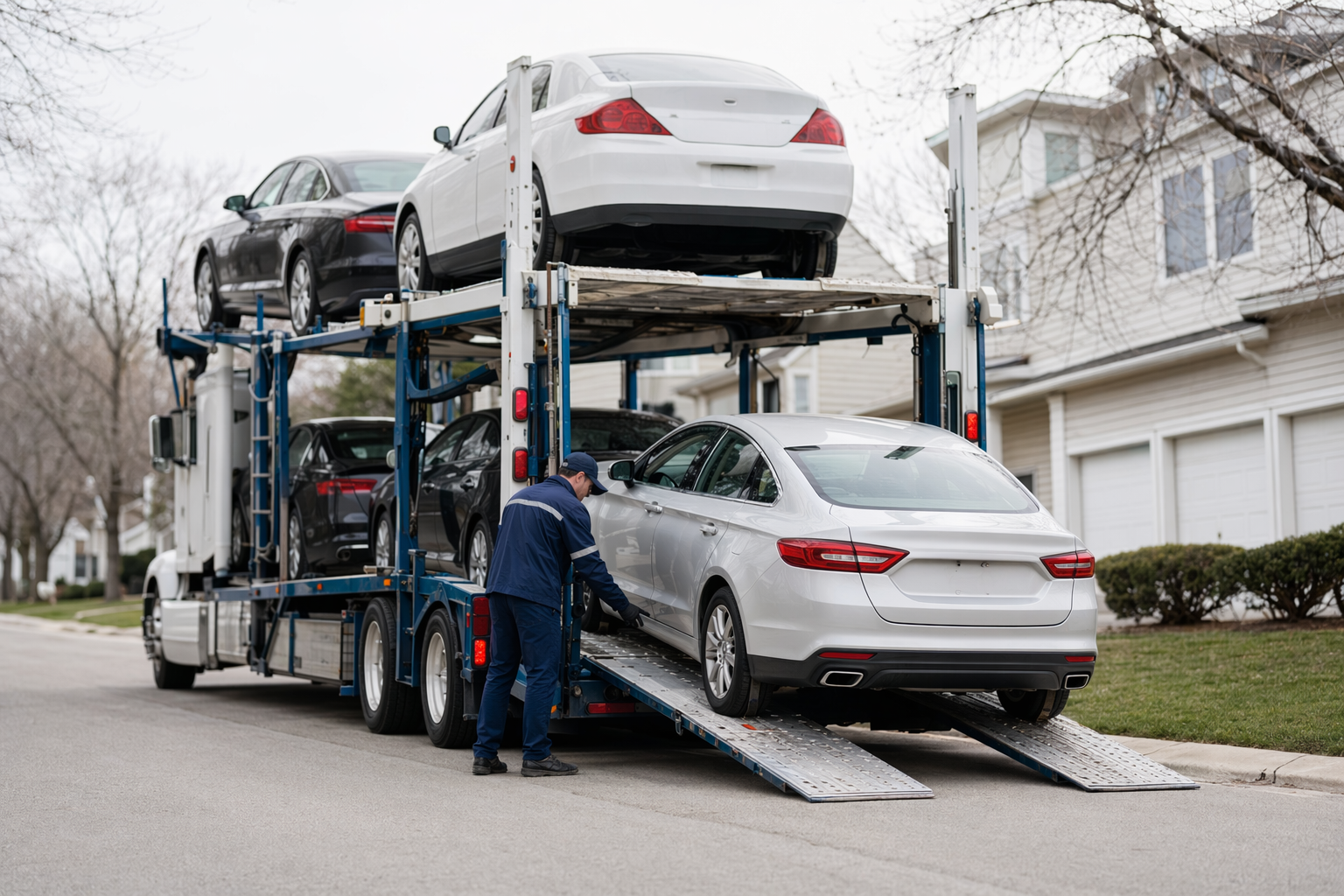
Start with the route. If your lane has easy truck access at both ends, door-to-door is usually the simplest option. If pickup or delivery is hard to reach, or you want a lower-cost handoff point, terminal-to-terminal can make sense.
What changes between door-to-door and terminal-to-terminal
Both options use the same transport market. The main difference is where the vehicle is handed over.
With door-to-door, the carrier picks up and delivers as close to your addresses as a safe, legal truck route allows. That may be your home, your apartment entrance, your office lot, or a nearby parking area if the street is too tight for a truck.
With terminal-to-terminal, you drop the car at a storage yard, lot, or dispatch location and pick it up from another one at the destination. That can work well if your schedule is flexible or your route already passes near a terminal.
The route comes first. Then look at access, timing, and total effort. On many lanes, door-to-door shipping is the default because it saves extra driving and coordination. On some lanes, terminal handoff can help when local streets, HOA rules, low trees, or downtown traffic make truck access difficult.
Cost and transit time: typical ranges

Door-to-door usually costs a little more because the truck has to work around neighborhood access and local timing. Terminal-to-terminal can be a bit cheaper on some routes, but not always. Storage fees, terminal hours, and the extra driving you do yourself can erase the savings.
Typical price difference on many routes: about $50 to $250 more for door-to-door versus terminal-to-terminal for a standard sedan on open transport. On busy lanes, the gap may be smaller. On remote routes, it can be larger. These are estimates only. The real number depends on the route, vehicle size, season, and how tight your pickup window is.
Typical transit time is often similar once the car is on the truck. What changes more is the pickup and delivery coordination.
- Short to mid-range routes: about 2 to 5 days in transit
- Cross-country routes: about 7 to 10 days in transit
- Typical pickup window before dispatch: about 1 to 5 days on common lanes
Terminal shipping can add time at the beginning or end if the terminal waits for a planned dispatch or has limited release hours. Door-to-door can also slow down if the truck cannot legally enter your street and a nearby meeting point has to be arranged. For a fuller breakdown, see what it costs and how car shipping works.
When door-to-door is the better fit
Choose door-to-door when convenience matters more than a small possible price difference. It is often the easier choice for families, students, new arrivals to the US, military moves, and anyone coordinating from another city or country.
Door-to-door is usually a good fit if:
- You want fewer handoffs and less extra driving
- Your pickup and delivery areas have wide streets and legal truck access
- You are shipping to or from a house, suburban area, or open commercial lot
- You want the simplest process for a relative who will hand over or receive the car
There is one important detail. Door-to-door does not always mean the truck parks directly in front of your exact address. Large carriers may need to meet you at a nearby shopping center, truck-friendly side street, or open lot. That is normal. Ask the carrier to confirm the likely meeting point and pickup window in writing before you book.
If you also need to compare trailer type, open transport is the most common and lower-cost option, while enclosed transport is usually chosen for higher-value, classic, or specialty vehicles.
When terminal-to-terminal makes more sense
Terminal-to-terminal can work well when access is the problem, not the linehaul route itself. If your building does not allow transport trucks, your street is narrow, or you are in a dense city core, a terminal handoff may be simpler.
It can also fit if:
- You have flexible time to drop off and pick up the vehicle
- You live near a terminal at one or both ends of the route
- You are trying to reduce cost on a straightforward lane
- You prefer not to wait at home for a pickup call
But ask direct questions first. Not every route has convenient terminals, and not every terminal keeps the same hours. Some charge storage after a short free period. Some require ID checks or a named person for release. Confirm the address, business hours, storage policy, and any added fees in writing.
Terminal shipping is less common than many people expect. On a lot of interstate lanes, carriers and brokers focus on door-to-door or near-door meeting points because that is what most customers choose. If a terminal option sounds much cheaper, make sure you understand every fee and whether the terminal is actually practical for your route.
How to choose for your route
Use this quick route-first checklist.
1. Check truck access at both ends.
Can a large car-hauler safely reach the street? Watch for narrow roads, low branches, low bridges, tight apartment loops, steep grades, downtown loading rules, and HOA restrictions.
2. Add up the real effort.
A lower terminal price is not always lower total cost if you need rides to and from the terminal, time off work, towing for a non-runner, or storage after hours.
3. Ask about the pickup window, not just transit time.
A common mistake is focusing only on days on the road. The handoff timing matters too. Ask when the vehicle could realistically be picked up and how much notice you will get.
4. Confirm the handoff details in writing.
Get the total price, pickup window, trailer type, and exact door-to-door or terminal process in writing before booking. If the plan is to meet nearby rather than at your exact address, make sure that is stated clearly.
5. Verify the company yourself.
Whether you choose a carrier or a broker, check the USDOT/MC number and ask for current insurance details. Review the terms directly before you commit. Our service is free and can help you compare licensed, insured options, but you should still vet the company yourself. See how to vet a car-shipping company.
Common overcharging and scam signals
The route should make sense. The price should make sense too. Be careful if one quote is far below the others on the same lane. That often means the number is only meant to get your booking, then the price changes when dispatch starts.
Watch for these red flags:
- A quote far below the rest with no clear route reason
- Pressure to book today or lose the rate
- Large upfront deposits before a carrier is assigned
- No USDOT/MC number, or they avoid insurance questions
- Vague answers about pickup windows, storage fees, or meeting points
Protect yourself with simple steps.
- Compare more than one option for the same route
- Verify the USDOT/MC number and insurance yourself
- Confirm total price and pickup window in writing before booking
- Read the cancellation and storage terms carefully
- Share only contact and shipment details when asking to be matched, never bank details, SSNs, or payment information
If you want help comparing licensed carriers and brokers for your lane, you can get matched at no cost. The matching service is free to the customer, and help is often available in more than one language.
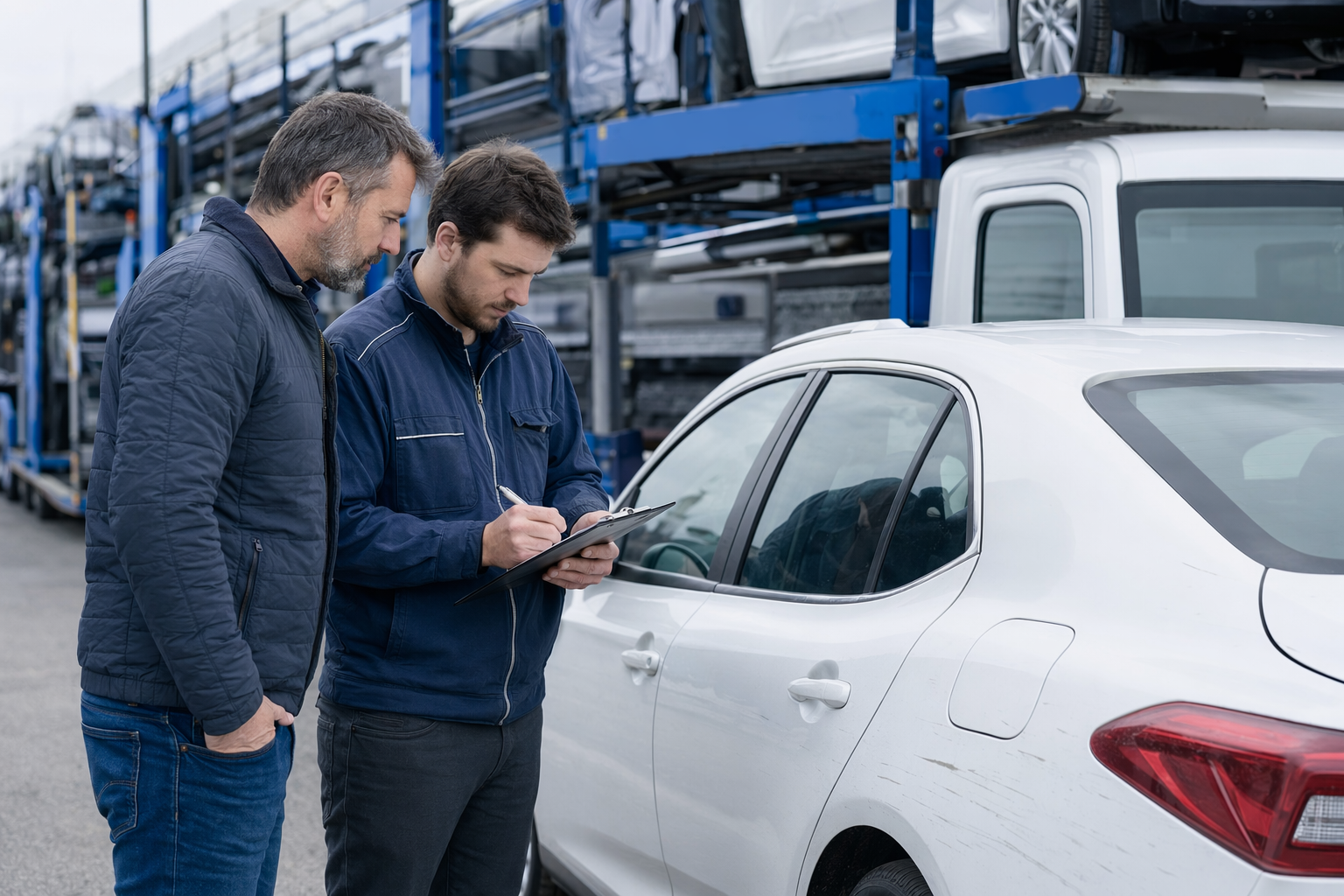
Door-to-door is usually easier, terminal-to-terminal can work on the right route, and you should always verify the company and get the price and pickup window in writing before booking.